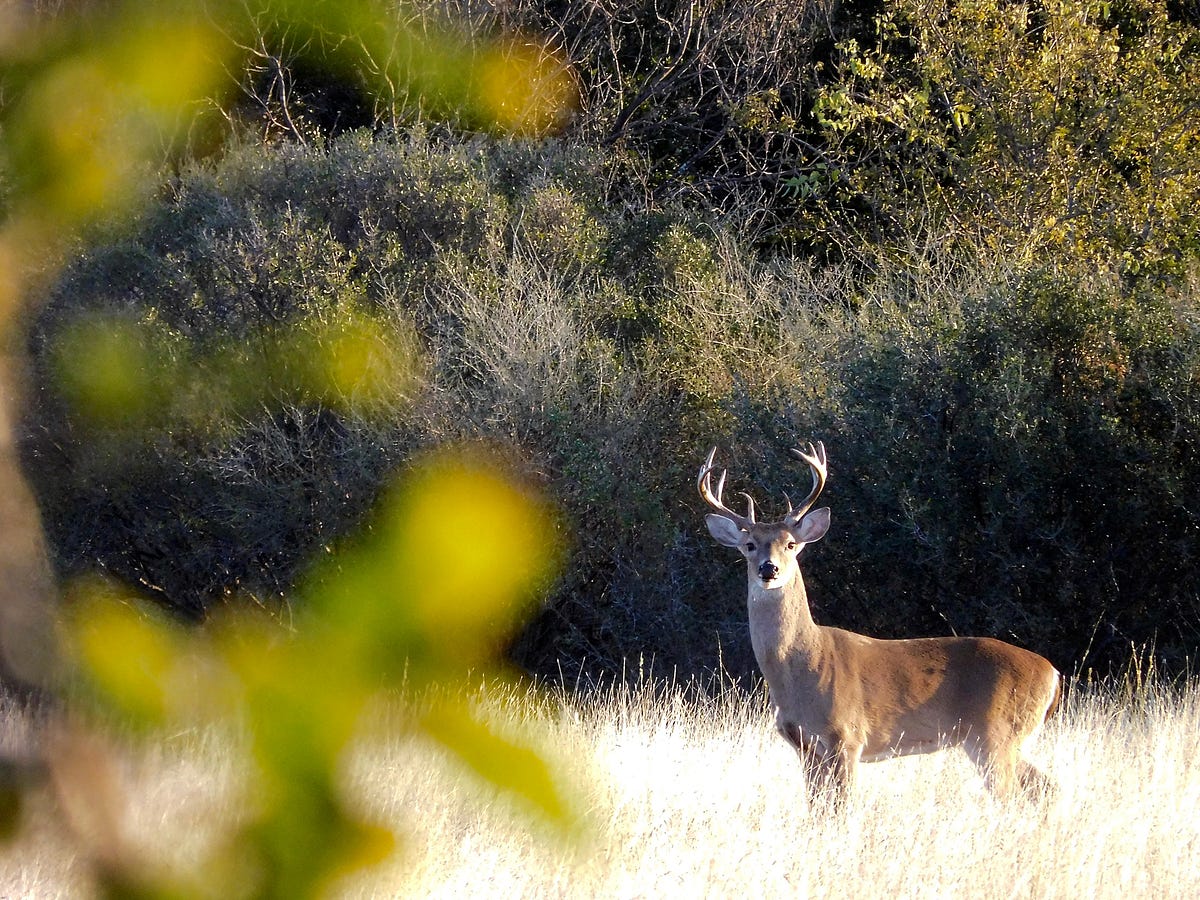
Hopefully we learn from our mistakes…
I had been rattling for the past 15 minutes. Nothing had showed, not even a yearling buck. Maybe, I should move further down the drainage and try again…
Two days earlier I had rattled in at least one buck every time I brought my antlers together. Some charged in. Others sneaked in cautiously. Before day’s end I had rattled in 23 bucks.
But today, nothing, even though the temperature and wind direction had pretty much remained the same.
I stood to leave, then heard movement behind me. I turned and watched the biggest buck I had seen all season bound away. Lesson relearned! I knew older bucks tend to respond to the sounds of two bucks fighting cautiously and slower. And, I knew better! I should have stayed longer, at least 20 minutes after I quit rattling.
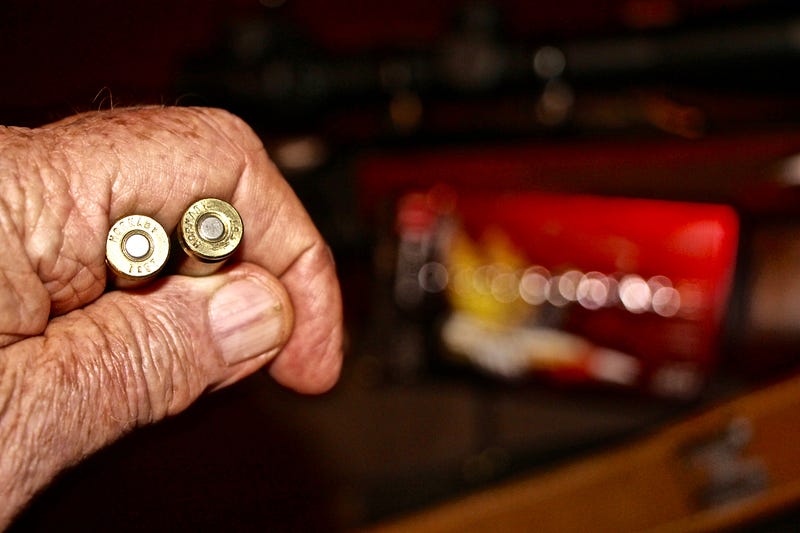
Three rattling stands later, I rattled in a 20-inch wide typical 10-point that grossed 160 Boone and Crockett. He had taken his time responding. I had laid down my rattling horns about 15 minutes before he came slipping in, circling to get downwind of where I was hidden next to a gnarly mesquite. Thankfully, using TRHP Outdoors Scent Guardian, he had not smelled me. My Ruger rifle, topped with a Trijicon scope and loaded with 275 Rigby 140 grain SP InterLock did an admirable job. Patience had been the key to success!

The 275 Rigby loaded with Hornady 140 grain SP InterLock
The next morning well before daylight, my whitetail in the salt and his soon to be delicious venison aging in the cooler, I was asked by the rancher, on whose place I was hunting, to rattle in a buck for a friend who had arrived late the night before. Of course, I would be more than happy to do my best!
En route in the pre-dawn darkness the rancher’s friend told me his personal choice in rounds was a 300 Win Mag shooting handloads with extremely light bullets, not Hornady, loaded beyond the max. “Speed kills!” he told me several times.
I, too noticed his rifle was topped with a variable scope, not Trijicon, set at the maximum magnification of 18-power.
My choice for rifles, bullet weight and velocity, as well as scopes would have been somewhat different, much preferring heavier bullets made by Hornady, as well as a Trijicon scope, likely an AccuPoint.
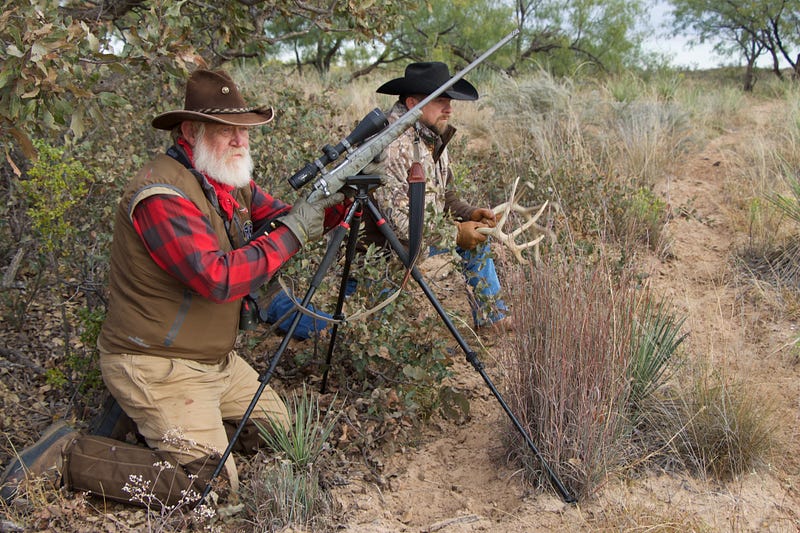
I found an ideal place to rattle and felt certain bucks would respond and appear in a shooting lane to our left. I sat down next to a tree and asked my hunter to sit a matter of inches from my outstretched left leg. Before starting to rattle, I leaned forward. “When the buck comes in, he will be less than 20 yards away. I’ll try to stop him and keep him occupied by grunting long enough for you to get a shot. I saw a really good buck here last week. He’s mature with a swelled neck; a massive 10-point, about 24-inches wide. He’s the one we are looking for.”
No sooner had I started my rattling sequence, the target buck walked into the shooting lane 15 yards away. I expected a shot. None came! The buck started to walk away. I snort-wheezed. He turned and stood broadside for at least 10 seconds. Still no shot!
I looked at my hunter. He was looking through his scope, then raising his head and looking over the top of it. He did this numerous times…
Finally, the buck walked away, no longer paying attention to my grunts. From the time the buck first stepped into the opening until he finally walked away my hunter had 45 seconds to take him!
Before I could ask what had happened. “I couldn’t see him when I looked through my scope. When I raised up to look over it I could see him.”
His scope was set on 18x! Great magnification if you plan to shoot extremely long range, but not so good if you are hunting close cover, expecting close range shots as one tends to do when rattling in whitetails. Without saying a word, I simply reached over and turned the scope down to 3x.
A half hour later, I found another place to rattle, one that simply felt good! Again I asked the hunter to sit down just off my outstretched left foot and get ready for a buck to appear. As he did, he pointed at his scope. This time the magnification was set on 3x. Perfect!
Preparing to rattle I noticed my hunter was “fidgeting” with the bolt “handle”.
No sooner I started my rattling sequence than a huge bodied 10-point burst upon the scene 20 or so yards away. His antlers, though barely spread to his erect forward ears, were extremely massive. His bases were nearly as big around as his ear butts. His tines were extremely tall, nearly as long as twice his ear length. His neck was swelled way beyond his jaws. As he strode in I saw his tarsal glands were stained the color of tar and that blackness reached almost to the ankle. No doubt this was one, big mature whitetail.
I waited for the shot, keeping an eye on the buck so I could see where the bullet would strike and how he reacted. No shot came.
Out of the corner of my eye I had seen my hunter reach up to push the rifle’s two-stage safety to fire. With no shot coming I glanced back at the hunter. He seemed to be pulling, almost jerking the trigger. The buck started walking away, I grunted. He stopped, turned and came back. Surely now my hunter would shoot and soon we would be getting a really close look at the buck, as in hands on.
But no shot came! The hunter kept pulling and jerking the trigger. The buck walked away. It was then I looked at his rifle. His bolt was halfway up, not all the way down! As a safety matter, this had kept the trigger from releasing the firing pin.
I wish I could tell you I rattled up another buck for my hunter that day. But, it did not happen.
There are some things and factors we have control over when hunting and some we do not. Take care of those over which we do have control…