(Still) Seeing Red
7 min read • 05 June, 2026There are hunts that live in the imagination for decades before they ever take shape in the field. In this edition of The Hole Story, Dr. Mike Arnold travels to the Scottish Highlands in pursuit of a long-held ambition, where steep ground, shifting conditions and wary Red deer demand patience at every step. As the moment finally presents itself, Hornady ELD-X ammunition is called upon at distance, bringing together preparation, judgement and a setting that feels as significant as the animal itself.
The stag’s leap forward was like that of a Quarter Horse clearing a log. I watched the animal’s spring through the Swarovski DS, 5x25 riflescope mounted on top of the Blaser R8, chambered in 6.5 Creedmoor. The jump preceded by only a bit over a second the clear slap from the Hornady 143-grain ELD-X bullet. If I’d thought to count in one-Mississippi’s, I would not have gotten past the second ‘One’ before the sound from the bullet’s impact traveled the 440+ yards. My guide Martin Reide grinned broadly and stated what I thought as well, “Heart shot.” His next words followed as quick as the bullet slap followed the leap: “Reload and stay on him!”
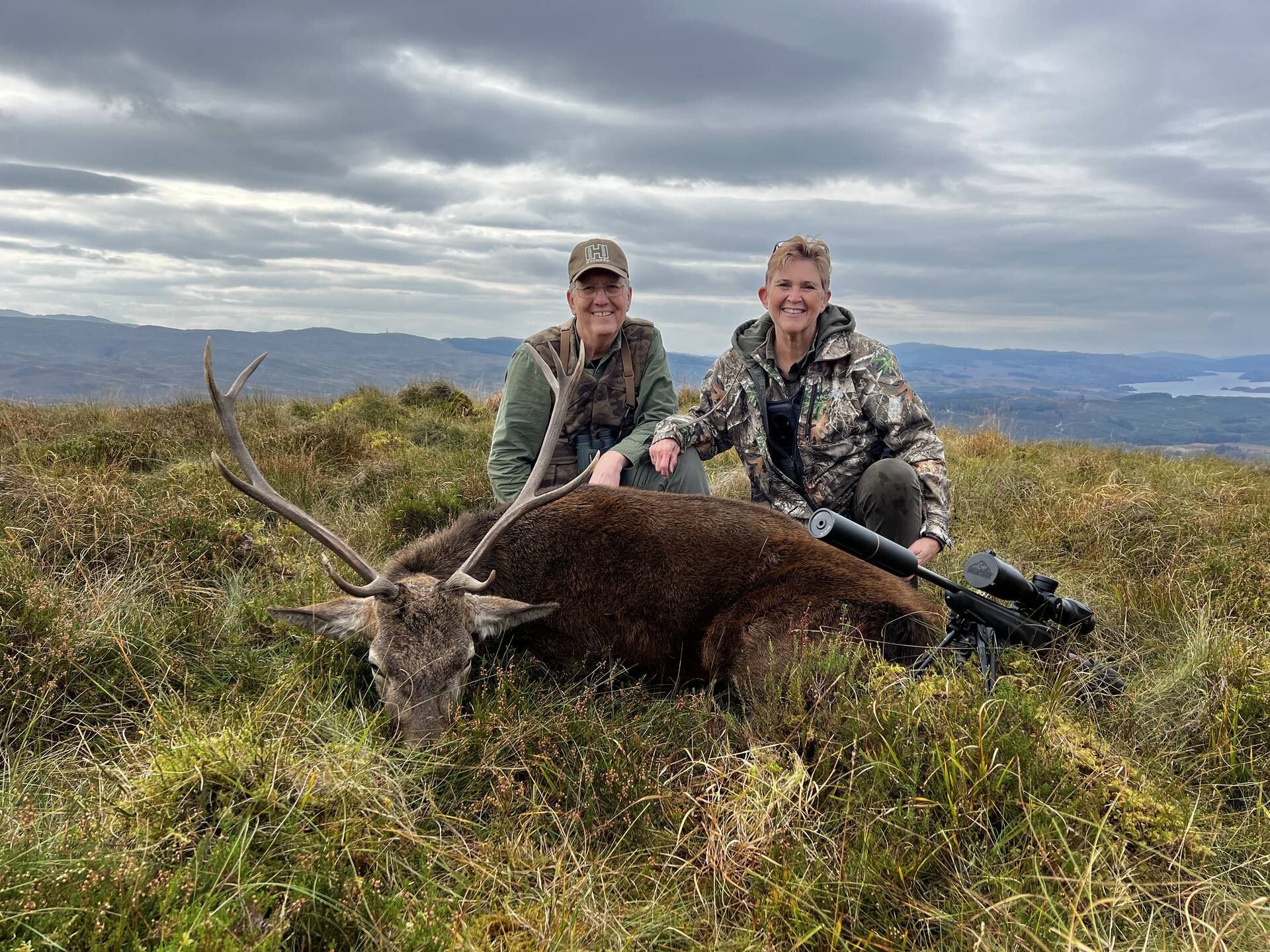
I did as Martin instructed, watching as the Scottish red stag, a.k.a. Cervus elaphus, struggled to keep his feet, finally collapsing onto the thick, soft layer of moss and the green and pink Calluna vulgaris. Given that we were in the midst of the magnificent Scottish Highlands it is apt that the hardy, C. vulgaris, goes by the common name of “Scotch heather.” It was also fitting that our trophy laid down on this particular bed for the final time because he had been feeding on the tender shoots when Martin, Frances and I spotted him with his herd of six hinds, and a young, “satellite” stag.
The fact that I had a trophy I never thought I would take, begs the question of the sequence of events leading to me walking up to this majestic, old warrior. When I write that I never thought I would achieve this goal, I mean in the distal and proximal sense. Over many decades, I dreamed of hunting red stag in their native, Scottish Highlands, imagining the feel of the wind, the smell of the heather, and the sensation of the spongy, boggy terrain under my boots. As the years passed by, I relegated such imaginings into the folder containing humorously termed “next lifetime” goals. Then a confluence of events resulted in my booking a muntjac and Chinese water deer (i.e. CWD) hunt in southern England with Joe Croot, Owner of Royal Outfitters UK.
The hunt with Joe was wonderfully successful, with a beautiful representative of each “fanged” deer species falling to my rifle. In the course of our quest, I discussed with him the fact that he controlled around 50,000 acres of prime red deer habitat in western Scotland. We hatched a plan, resulting in Frances and I buying another set of plane tickets, these terminating in Glasgow. That got past the distal barriers to my taking a red stag, but there were still several proximal hurdles. The main one involved the reality that even though it was the rut, with the dominant stags giving forth with their roars, neither they nor their accompanying hinds lacked wariness. Going along with this was the fact that a group of red deer means many more eyes for seeing a less-than-extremely-stealthy hunter, a.k.a., me.
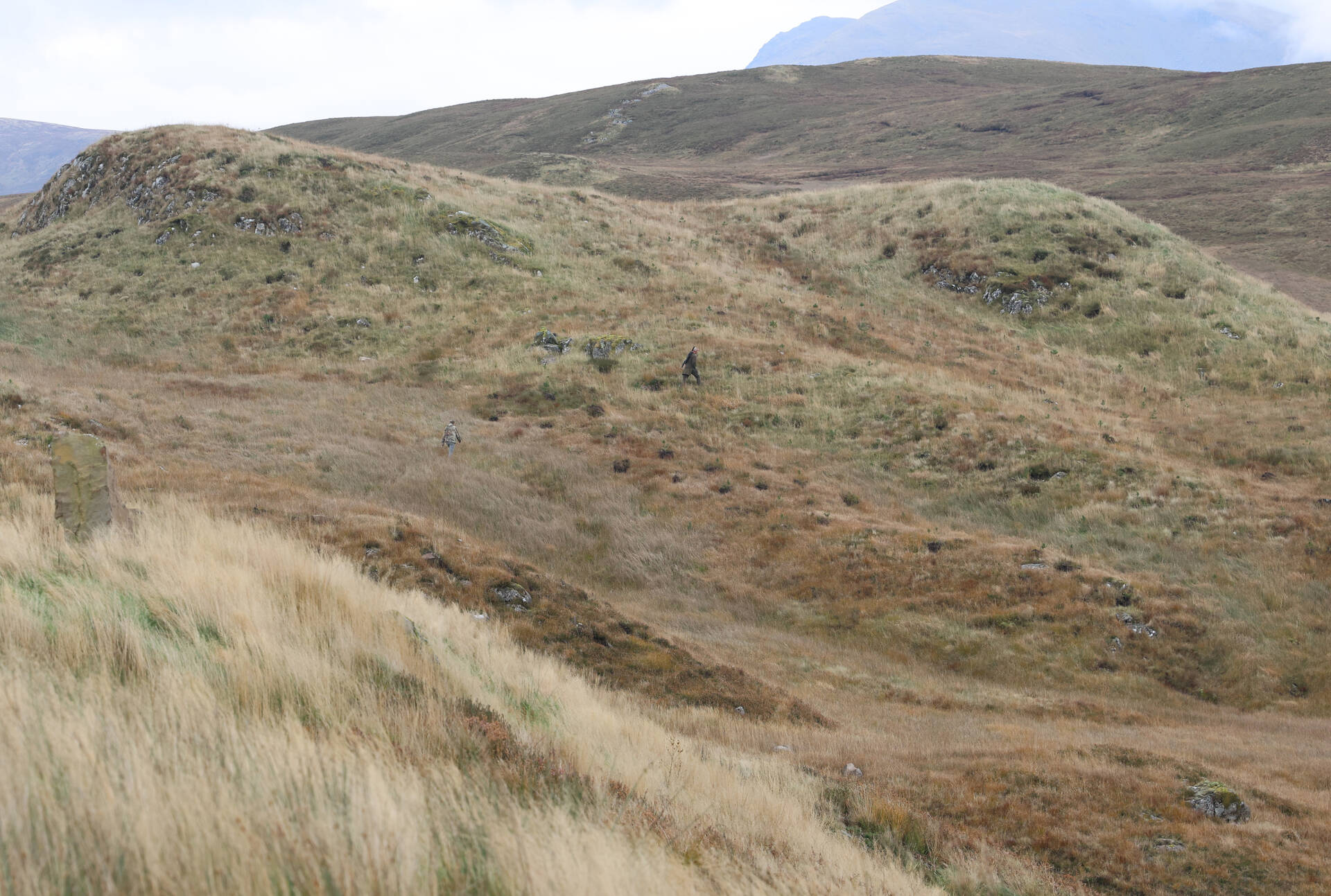
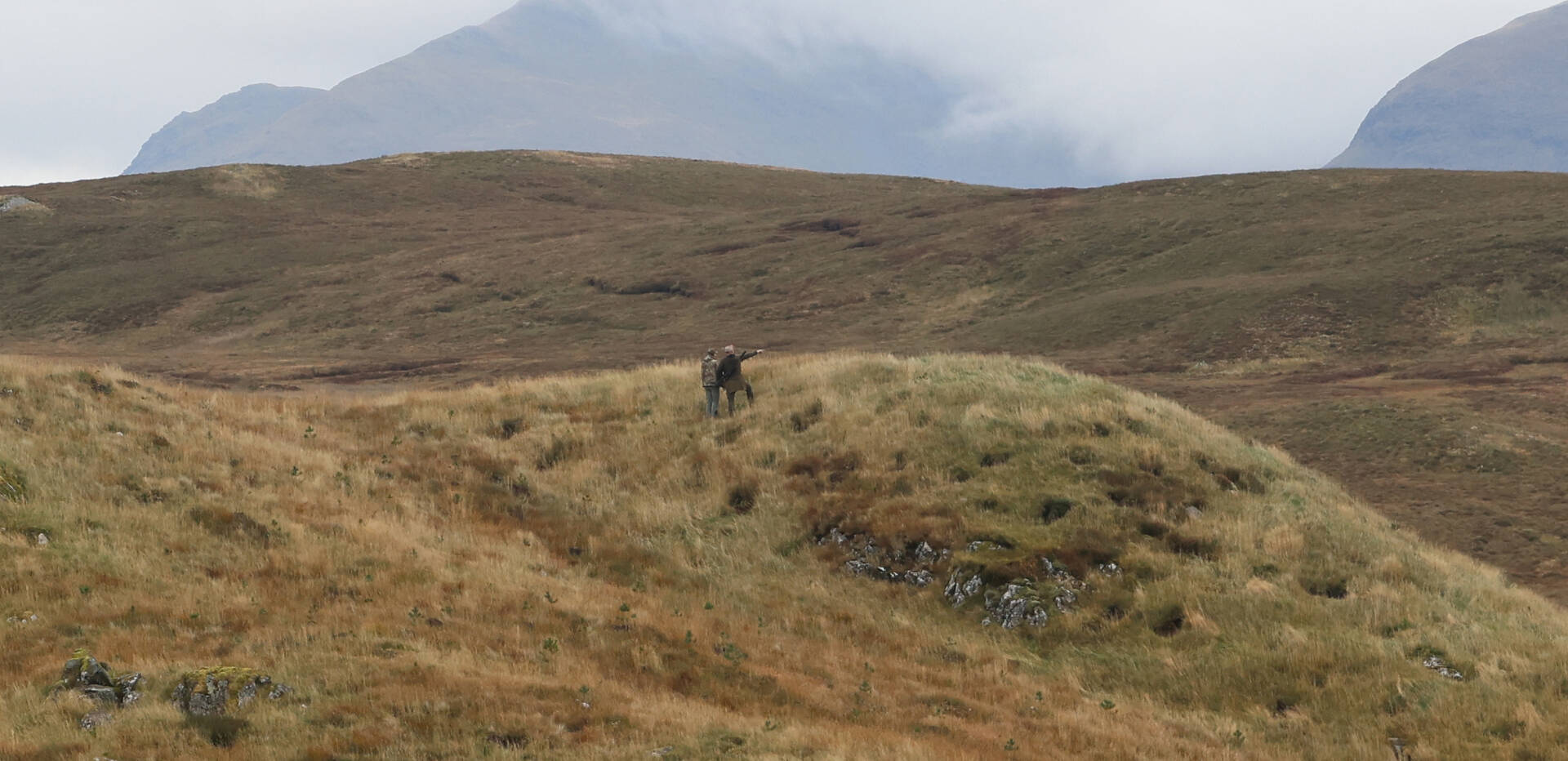
The other factors working against us bagging this specific stag began when we spotted him grazing with his hinds at 650-yards from our truck. Martin doubted we could get close enough without spooking the group. While our guide studied the terrain, I used my Vortex binocular-rangefinder to range the group again, and then a nearby hill which we might climb for a shot. Doing some mental gymnastics involving the length of the sides of a triangle, I estimated we’d be about 400-yards away from the group, if we could get to the top of the slope before they moved. Martin indicated his doubt for success with a grunt, but he also grinned and said, “That’s a beautiful stag, so let’s try.”
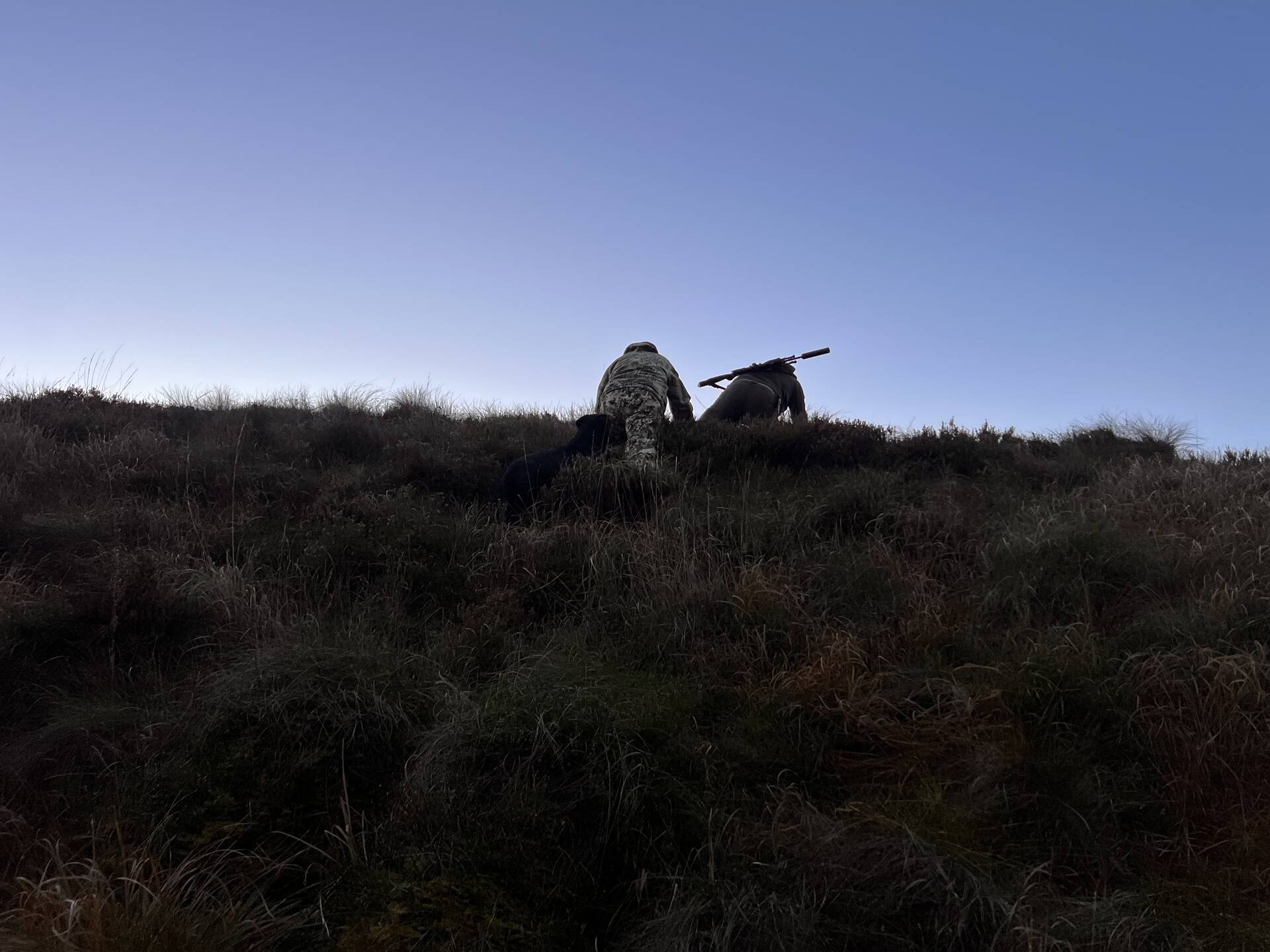
We left Frances at the truck, both as a decoy for the red deer (we hoped they could not count and thus would not notice Martin and me disappearing) and as a spotter. We regularly halted both to give me a chance to catch my breath, and to look back at Frances through our binoculars. Each time we looked, she gave us a thumbs-up, indicating the deer were still grazing/browsing in the same area. It took around an hour over the extremely rough terrain to arrive at the crest. Just below the shooting platform chosen by Martin we rested, again for me to catch my breath and remove my pack. We began the final approach on hands and knees, eventually switching to a belly-crawl. I hesitated just below the ridgeline, staring at the soles of Martin’s boots. I watched as he raised his optics, slowly lowered them, and then just as slowly, unfolded the Harris bipod and finally slid the rifle into position. Martin then cupped his hand indicating my final crawl into position. I slowly moved up until my shoulder was against the butt of the R8, cheek resting against the comb of the stock, and my eye focused on the red deer through the Swarovski’s lenses.
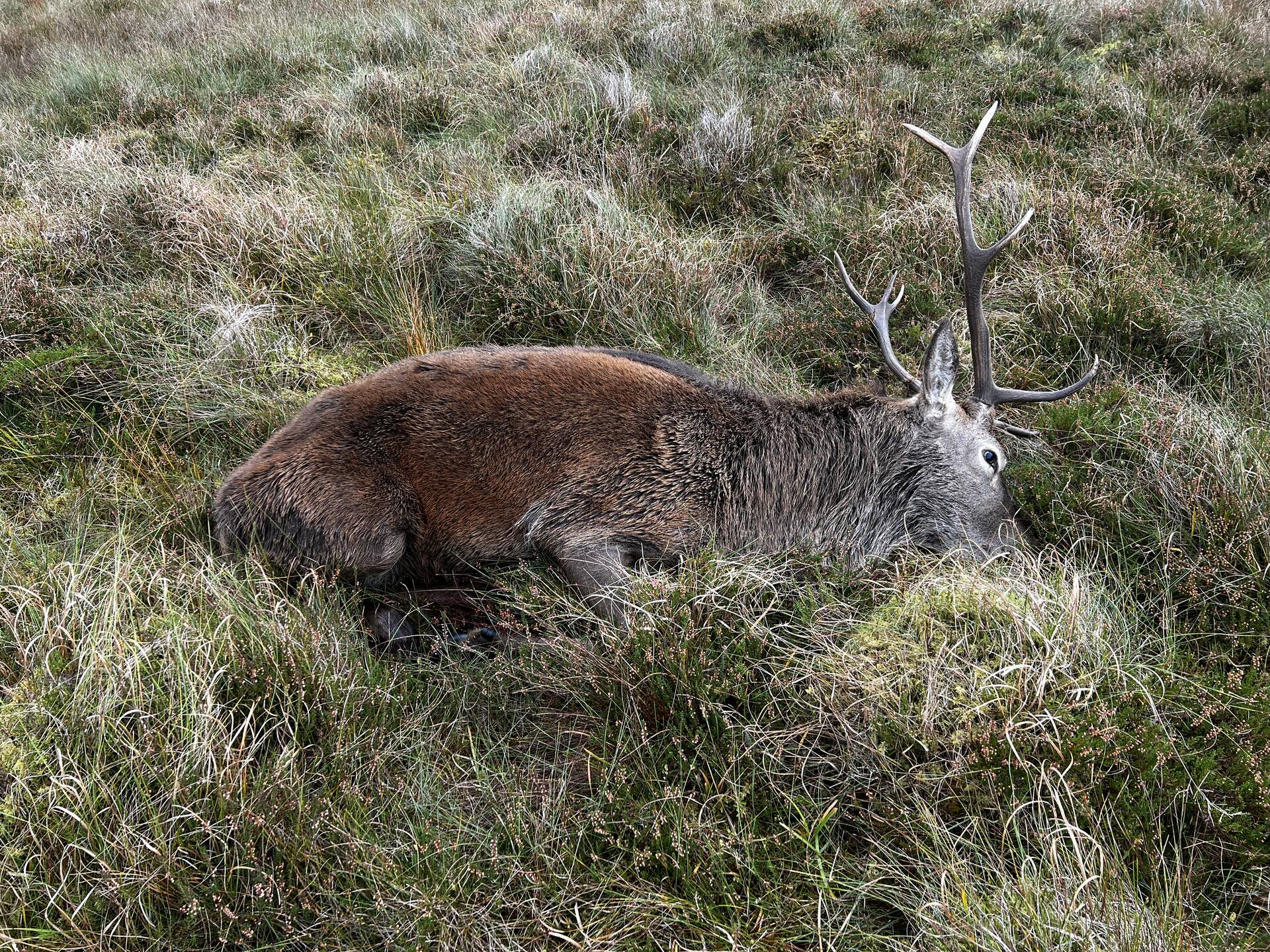
The final step before deciding to take the shot or not, depended on the riflescope’s ability to provide a distance to the target, and also an illuminated horizontal line used for elevational adjustment. Depressing the button on the top of the riflescope, resulted in a reading of 404-meters. I knew this translated to ~450-yards. Martin looked at me and whispered the 1000-dollar question, “Can you make the shot?” I knew how accurate the R8+ELD-X was, having proven that on the previous day’s shot at a smaller red stag. I noted the lack of wind where we lay, and that the vegetation near the red deer showed no appreciable breeze either. I nodded to Martin. Holding the horizontal, elevation-adjustment line high on the stag's shoulder, I squeezed off the shot. The ELD-X proved its accuracy, and effectiveness on this tough, elk-relative, with the stag going only 50-yards before collapsing.
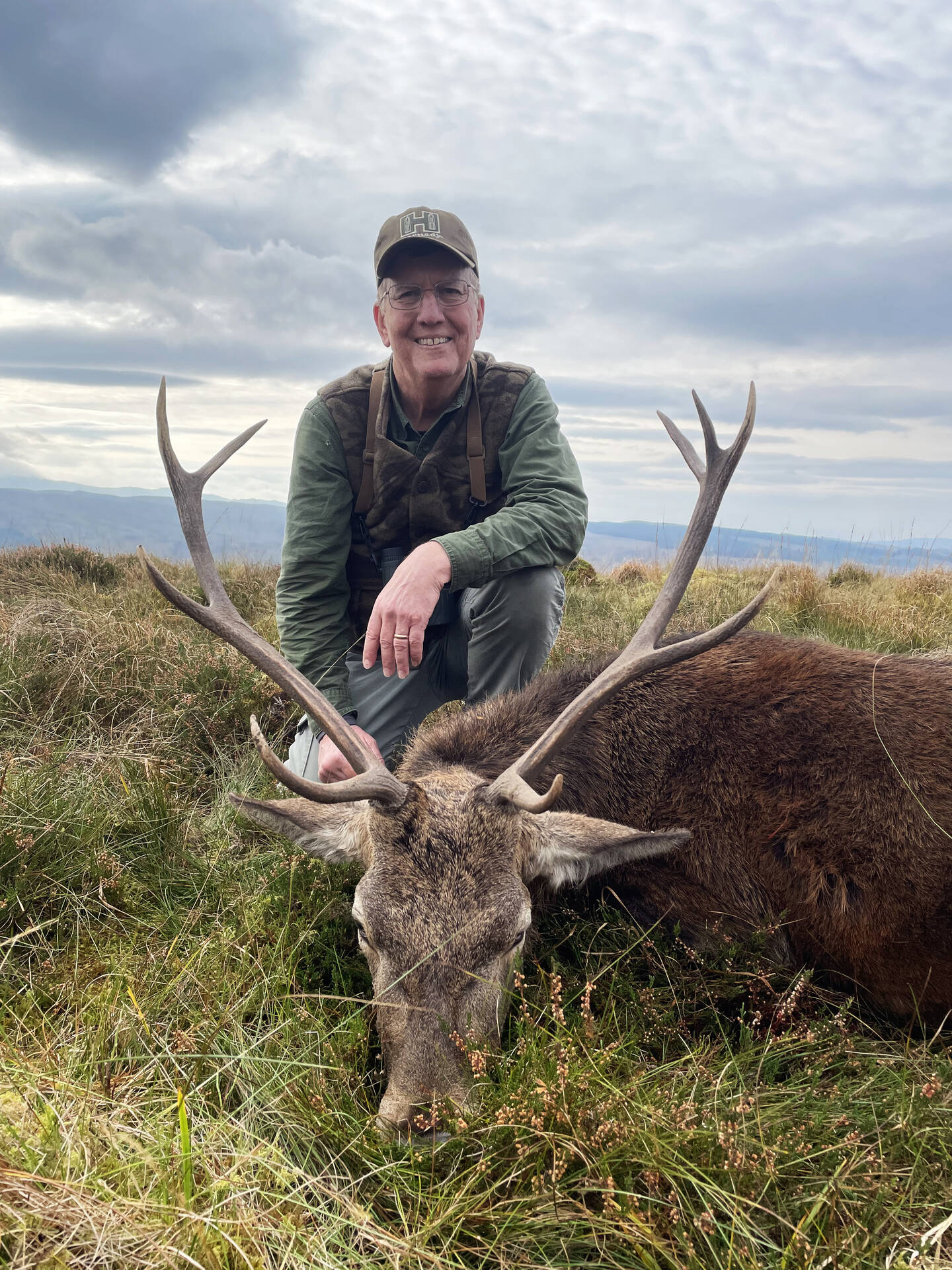
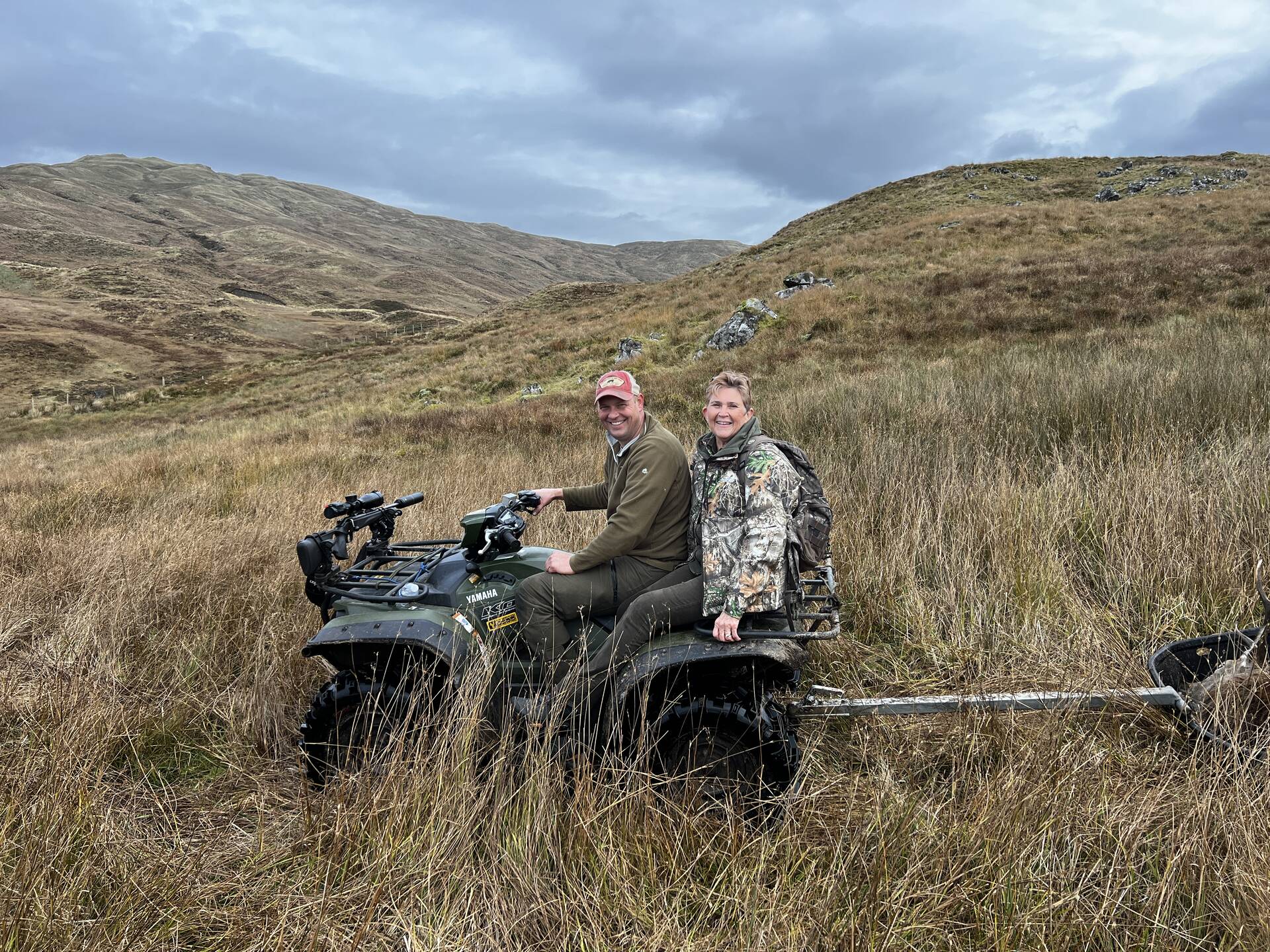
As Martin headed back to the truck to pick up his 4-wheeler and sled for recovering the deer, and of course our decoy and spotter, I slowly made my way across the intervening glen and up the slope to where the stag lay. This is where I explain the title of this article. When seen next to his harem of hinds, the stag looked almost black, indicating his switch from the rich, reddish-brown summer coat to the thick, dense, and longer, grayish hair typical in the winter. Yet when I walked up to the beautiful animal, I saw that he retained a good deal of his auburn pelage, from his shoulders to his flanks. I knelt down beside him and ran my hand across his thick coat, smelling the strong rut odors. He was indeed an old fighter, who fathered many young over his lifetime. I hoped someday to return to this beautiful land and hunt for one of his descendants.
Author profile
Mike Arnold is professor and Head of the Department of Genetics at the University of Georgia and author of the 2022 book, BRINGING BACK THE LIONS: International Hunters, Local Tribespeople, and the Miraculous Rescue of a Doomed Ecosystem in Mozambique. Mike’s newest book, BRINGING BACK THE WILD – Stories from Revitalized Ecosystems Around the World and How Sport Hunting Supports Them, appeared in June 2025. You can find a description of Mike’s travels, talks, articles, and books at mikearnoldoutdoors.com.