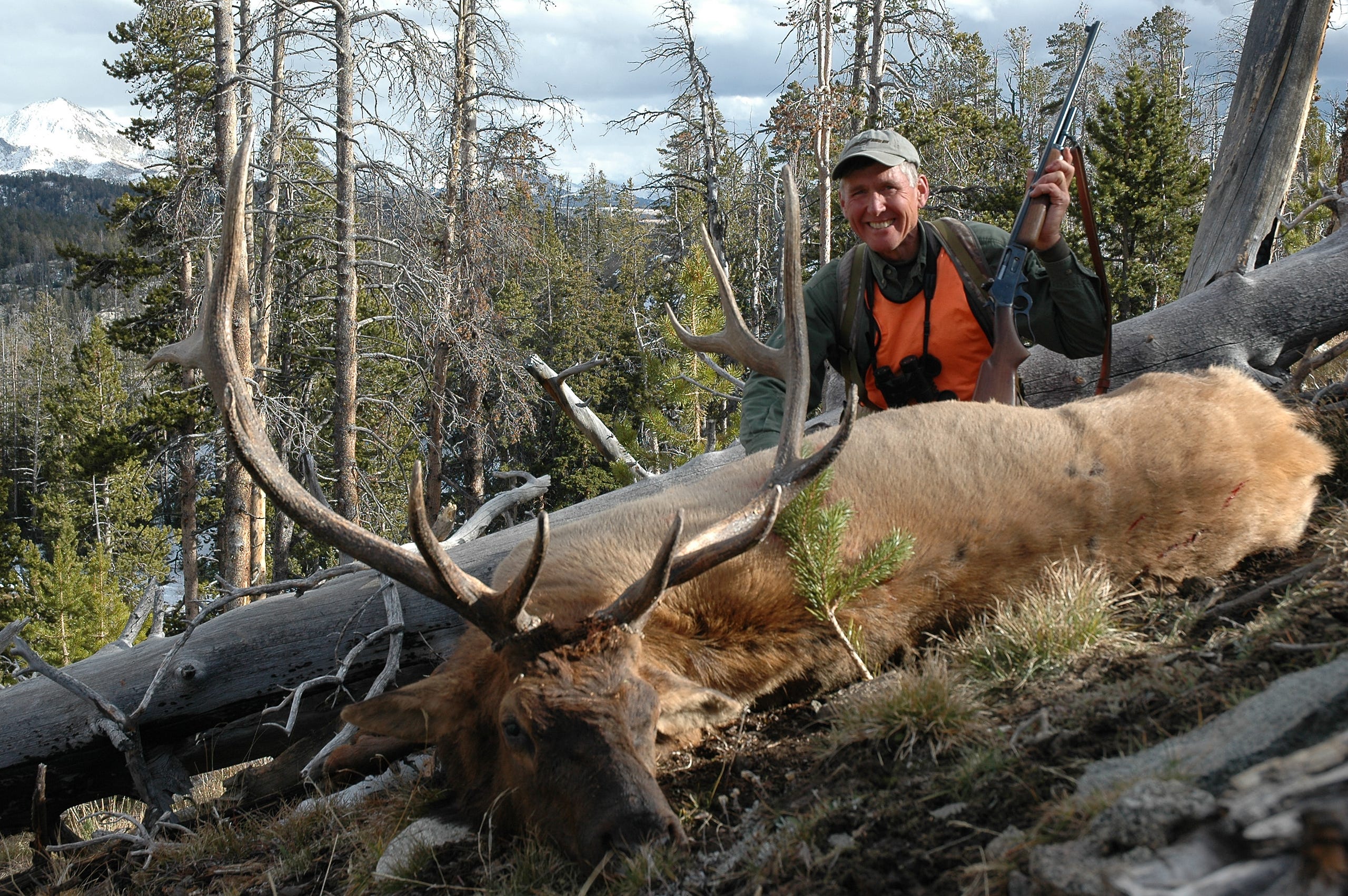
Washington-based Wayne van Zwoll is not only a passionate hunter and rifle Shot, but also a prolific and respected author on all things rifle related, with no less than 16 books to his name and thousands of articles. Not only is Wayne an expert on rifles and ballistics, but his hunting and writing have taken him to all five continents to hunt a multitude of game species. When asked why he uses Hornady ammunition Wayne’s got a straightforward answer: “Over the past 20 years, I’ve used more Hornady ammo by far than any other, and featured it in my writing and photos far more often than several other top brands combined. I just returned from the range where Hornady loads in 375 Ruger cut a half-inch three-shot group at 100 yards. It’s good stuff!”
Who taught you to shoot/hunt?
Neither of my parents liked firearms; I learned marksmanship from a local plumber, who coached me in his basement range and got me started in competition.
What is the most important thing you’ve learned through hunting?
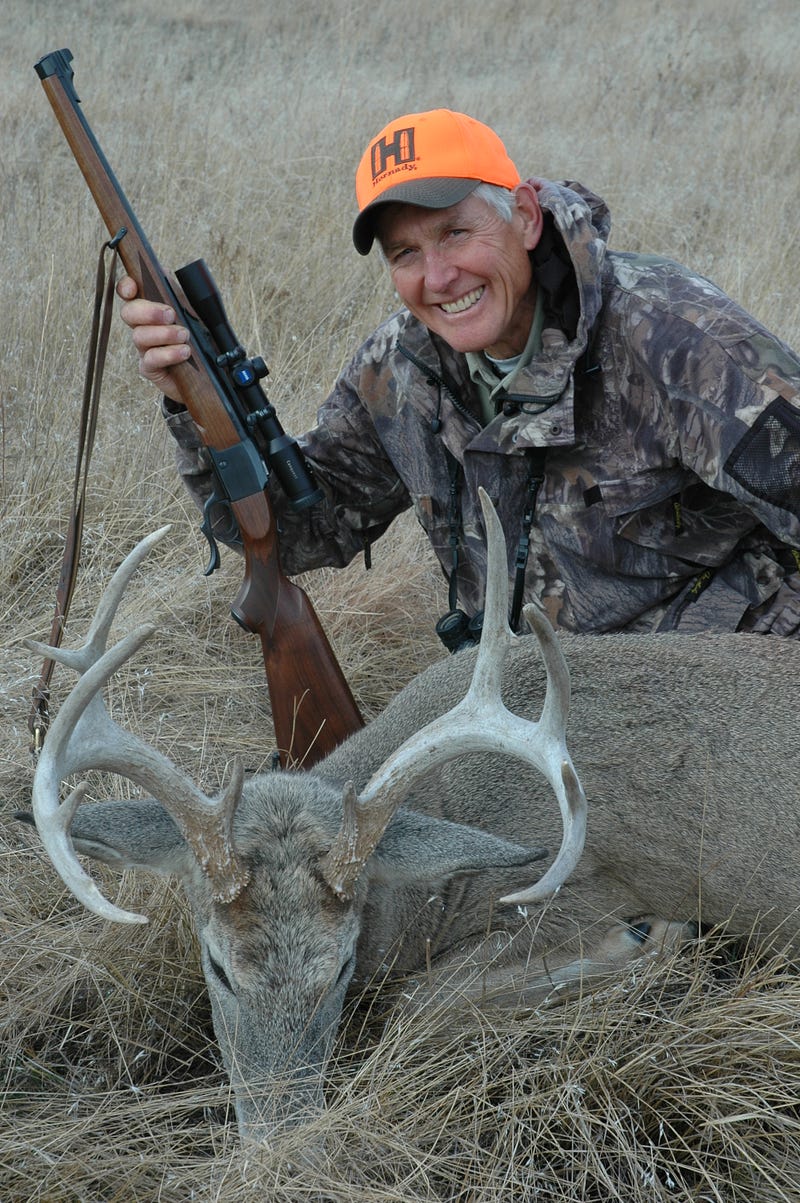
Hunting has instilled an abiding love of the outdoors, confirmed my belief in its Creator, pushed me to learn more about the natural world and tested my will to persist, my patience, physical endurance and field skills, as well as my sense of humor.
You have taught forestry — how does your knowledge of forestry feed your hunting and the need for controlling deer numbers?
My doctorate in Forestry (or Wildlife Policy) focused on post-War changes in hunting motive and method, and their effects on wildlife management — a study that dovetails into my keen interest in history, and my writing focus on big game hunting, rifles and ballistics.
You competed in smallbore classes in the 70s — why didn’t you continue with competition? Or have you?
In the early 1970s I was shooting quite well and qualified for the final Olympic try-outs. Sadly, my M.S. program at Oregon State U. started that weekend, and my studies seemed more important. Now, unable to see iron sights as sharply as I did then, it seems to me the tryouts would have been the smarter choice. School would have waited! I did win two Washington State prone championships, and a Northwest Regional prone championship in the 1970s, and enjoyed that shooting. Alas, making a living got in the way of competition. Over the past few years, I’ve published more than 100 magazine articles annually. That schedule, with 16 books squeezed in, leaves little room for fun! I still have my match rifle, though, and have competed in centerfire competition occasionally, too.
What is your favorite species to hunt, and where?
Favorite hunts? Hoo boy, that’s a tough one! A good elk hunt in the Rockies during rut is hard to beat. I’m always ready to hunt eland in southern Africa. Both efforts demand walking in big country. Both pit me against big animals with keen senses.
And what would be your favorite hunting set up?
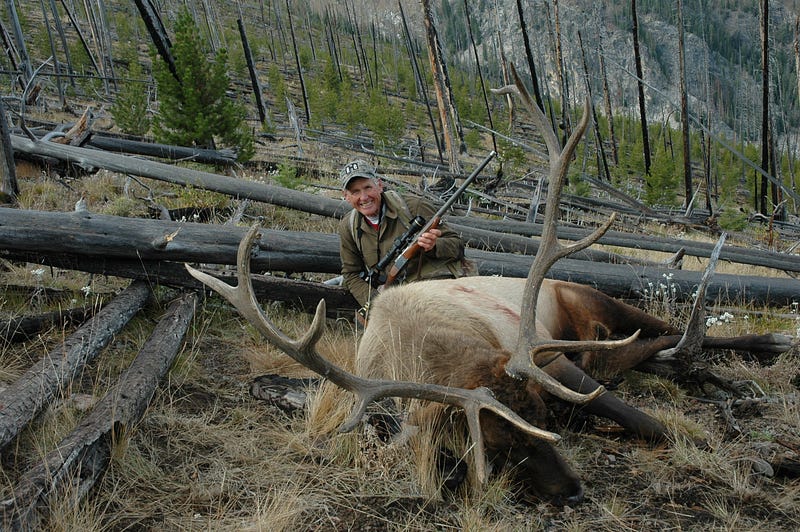
Favorite gear? Another tough one. I’ve hunted on most of the continents, killed game from duiker to elephant, enjoyed accumulating rifles of various types — for their history, grace of line and mechanical brilliance as well as their effectiveness. I’m now hunting as much as I can stateside with iron-sighted lever rifles a century old. I just returned from a pronghorn hunt that yielded a buck to a Savage 1899 built in 1908 — a 25–35 firing a Hornady load which is about to be announced.
For elk, eland and the like, I favor pre-1950 Winchester Model 70 rifles, custom-stocked Mausers. I’d like to carry Mannlicher-Schoenauers from the 1950s, too. I’ve used 36 cartridges on elk alone, so praising just one is tough! Among belted Magnums, I like the 300 H&H, the 308 Norma, the 340 Weatherby. I’m fond of the 280 Ackley, the 30–06, the 9.3x62. For lighter game, the 240 Weatherby, 25–06 and 270 are hard to beat. I’m leaving out dozens of worthy rounds! You may as well try to name your favorite song or book!
For optics, my pick in hunting binoculars is a Zeiss or a Leica 8x32. In scopes for big game, I favor the out-of-favor fixed-powers. I’d be quite satisfied to hunt the rest of my days with my out-of-production 4x Zeiss, or a Leupold 3x. Among variables, my first choices are the 3–9x36 Swarovski, and Leupold’s 2.5–8x36. My 3–9x40 Meopta ranks up there too!
What led to your writing career?
In 1975, if memory serves, I arrowed a fine mule deer buck and wrote up the hunt for Bowhunter magazine. I was already contributing outdoors writing to the local newspaper. I’ve written (and photographed) full-time for more than 20 years now.
What is the most important factor for accuracy when hunting — assuming your rifle and scope are in good working order!
The only measure of hunting accuracy that counts is your ability to hold the rifle on target and fire without disturbing the sight picture!
You’ve given a lot of shooting seminars for Safari Club International — what is the best drill for achieving good marksmanship, in your opinion?
The best hunting-rifle drill is firing from all four field positions (prone, sitting, kneeling, offhand) at paper targets so you can see exactly where the shots go. A 22 rimfire rifle is exceedingly helpful. The low cost of its ammo encourages more practice; its mild report and recoil help you tune position and technique without flinching.
What would be your dream hunt?
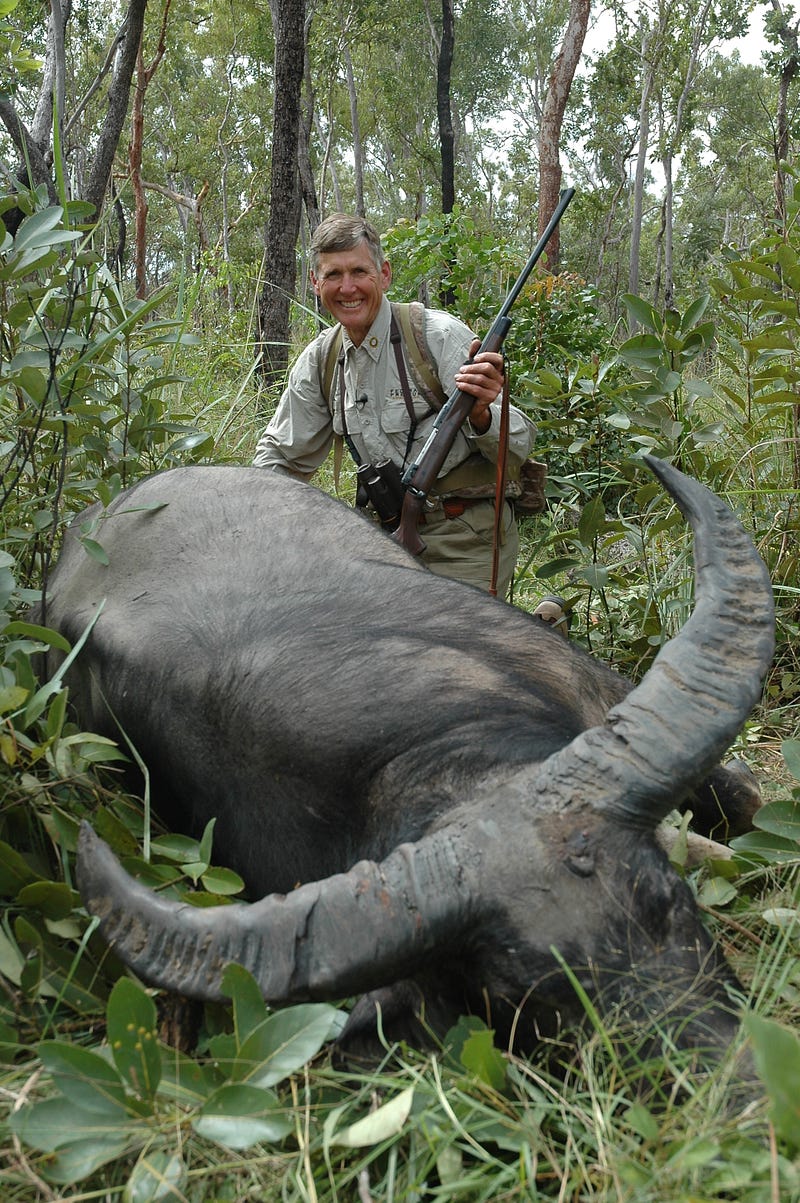
Dream hunt? Stone’s sheep in the Cassiar Mountain Range, British Columbia comes to mind. I’ve always thought Lord Derby eland stunningly beautiful. At around $35,000, both these hunts are above my pay grade. I’d be delighted to hunt elephants again, or try for a truly big Cape buffalo, or travel to Alaska’s best moose range for an outstanding bull.
You wrote “The Hunter’s Guide to Long-Range Shooting” in 2006. Which rifle set-up and ammunition would you choose for long-range hunting, and why?
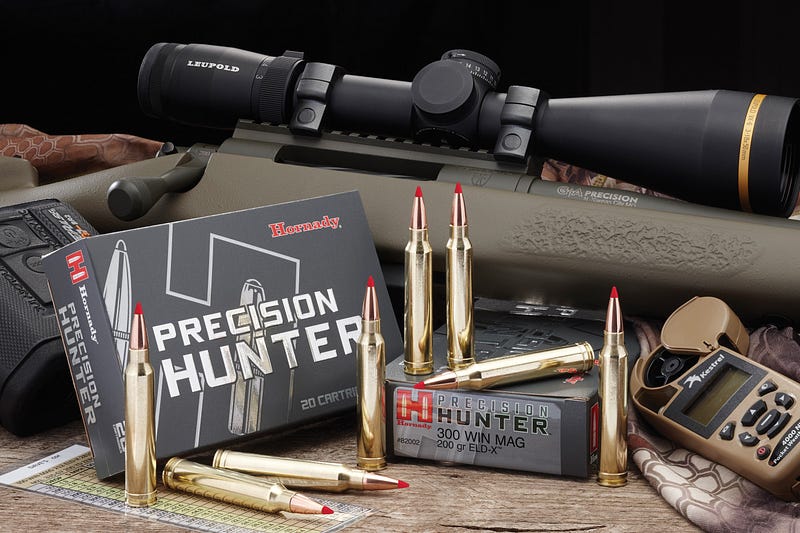
Though I enjoy (and learn a lot from) long-range target shooting, I try not to kill game at distance. I’ve shot only one animal beyond 450 yards (a 600-yard one-shot kill on an elk with a rifle I’d used repeatedly on targets to 500 and beyond, from a stone-solid prone position in tomb-still air). In fact, I usually refrain from shooting beyond 300 yards in the field, and then only when 90% sure of a first-round kill. The best part of hunting — and the real test of a hunter — is in the last yards of a close approach. Were I to shoot thin-skinned game at distance, with a factory load, I’d use a 300 Winchester with the new Hornady ELD-X 200 gr Precision Hunter ammo.
What piece of advice would you pass on to someone at the start of their hunting career?
Leave your ego behind. The contest is between you and the game, not you and someone else for the biggest antlers. Take a shot only when under those conditions and from that position you could put nine of 10 bullets in a target the size of the animal’s vitals. Give thanks for each kill, and for every hour you spend failing to find game.