A Hog of a Different… Hoof
8 min read • 16 September, 2026Some hunters have a particular species they dream of pursuing. Mike Arnold has always been drawn to something a little different, seeking out unusual game animals that many other hunters may never have encountered.
That was certainly the case when he heard about the Choctaw Hog, an unusual strain of Mule-footed hog found on the Choctaw Nation’s hunting grounds in southeast Oklahoma. With solid, uncloven hooves, distinctive wattles and a history stretching back centuries, this was exactly the sort of animal that piqued Mike’s interest.
Armed with a .308 Winchester and Hornady Precision Hunter ammunition loaded with 178-grain ELD-X bullets, he headed to Oklahoma in search of a hog with a story every bit as unusual as its appearance.
“χοῖροι μέν εἰσιν ἢ σχιστοποδοι ἢ ἀσχιστοποδοι· ἔστι δὲ ἐν Ἰλλυρίῃ καὶ Παίωνι καὶ ἄλλοσε χοῖροι ἀσχιστοποδοι.” (ἐν τῇ Ἀριστοτέλους αὐτοῦ γλώττῃ, ἔτι καὶ ἐκ τοῦ δευτέρου βιβλίου αὐτοῦ, Ἀριστοτέλους Ἱστορίαι Ζῴων)
In case there are a few out there who are, like me, Philistines, and thus don’t have Ancient Greek as a second language: “Swine are either cloven-footed or uncloven-footed; for there are in Illyria and in Paeonia and elsewhere solid-hooved swine.” – Aristotle, History of Animals II.1 (trans. D’Arcy Wentworth Thompson).
C’mon, admit it, you’re impressed! Where else in hunting literature will you face Ancient Greek? OK, so again, I nerded out. However, the fact is that Aristotle reported the object of this article, uncloven-footed swine, a.k.a. Mule-footed hogs, in the 4th Century BC. I don’t know whether the herds of Balkan hogs (“Illyria and Paeonia”) were ancestors of the North American animals I hunted. However, what is known is that aggressive and tough European Wild Boars were the distant predecessors of my ‘Choctaw Hog’. What is also clear is that these Wild Boar derivatives made their way to the shores of what is now the Southeast United States in Spanish ships nearly 2000 years after Aristotle wrote about their unusual feet.
Apologies if you’ve heard me say this in talks at Conventions or read it in my previous articles or books. I love hunting what others might consider strange game animals. From my first African trophy being a Vaal rhebok to heading to the Yucatán Peninsula for Brocket deer and the tropical birds, Crested Guan and Great Curassow, I go after what many other hunters have never seen, or desired. No apologies for my idiosyncrasy of preferring the weird among game animals. Maybe it’s because I started my biological studies with New World Leaf-Nosed bats, a group including the blood-feeding, ‘Vampire’ species. I suspect God provided me this predilection. Morgan Freeman, in one of his movie roles, reflected this divinely-awarded bias well when he answered a little [white] girl’s innocent question, “Did God paint you?” Freeman smiled broadly and stated, “Yes! Because God loves wonderful variety!”
Regardless of why, my desire to hunt the unique was the reason I immediately perked up when Larry “Mr. Whitetail” Weishuhn mentioned the existence of feral, Mule-footed hogs on one of my favorite hunting grounds located near Blanco, Oklahoma – the Choctaw Hunting Lodge land. As the name implies, the Choctaw Nation owns and operates this property, in this case under the leadership of managers Dusty and Nacolh Vickrey. The Lodge environs include 21,000 acres of prime, Southeast Oklahoma hunting grounds, consisting of a mixture of dense forests and open meadows.
The Choctaw Hog found its way to this corner of Oklahoma with its Native American agriculturalists. The forced migration of the Choctaw from their homes in Mississippi to the reservation established for them in Oklahoma in the 1830’s marked the first of many mandatory relocations down the infamous Trail-of-Tears. The Choctaw Hog was well-suited to the semi-feral system of husbandry then followed. Highly aggressive and a great forager, the Mule-footed animals survived well in the forests and prairies until rounded up by their masters.
Unfortunately, with today’s swine industry dependent upon concrete-floors with many pigs in the same enclosure, animals with the solid hooves and bad attitudes of the Choctaw hog are not in favor. This means the potential loss of an amazing breed. This is where hunters like me enter the frame. Our interest in hunting a not-your-common-garden-variety-feral-hog, provides value for these animals, making the maintenance of populations worthwhile for outfitters like Dusty and Nacolh. In fact, Dusty has plans beyond simply keeping the Choctaw Hog on the Hunting Lodge property; he is encouraging the increase of unusual color variants, adding even more interest for his clients. More about this later.
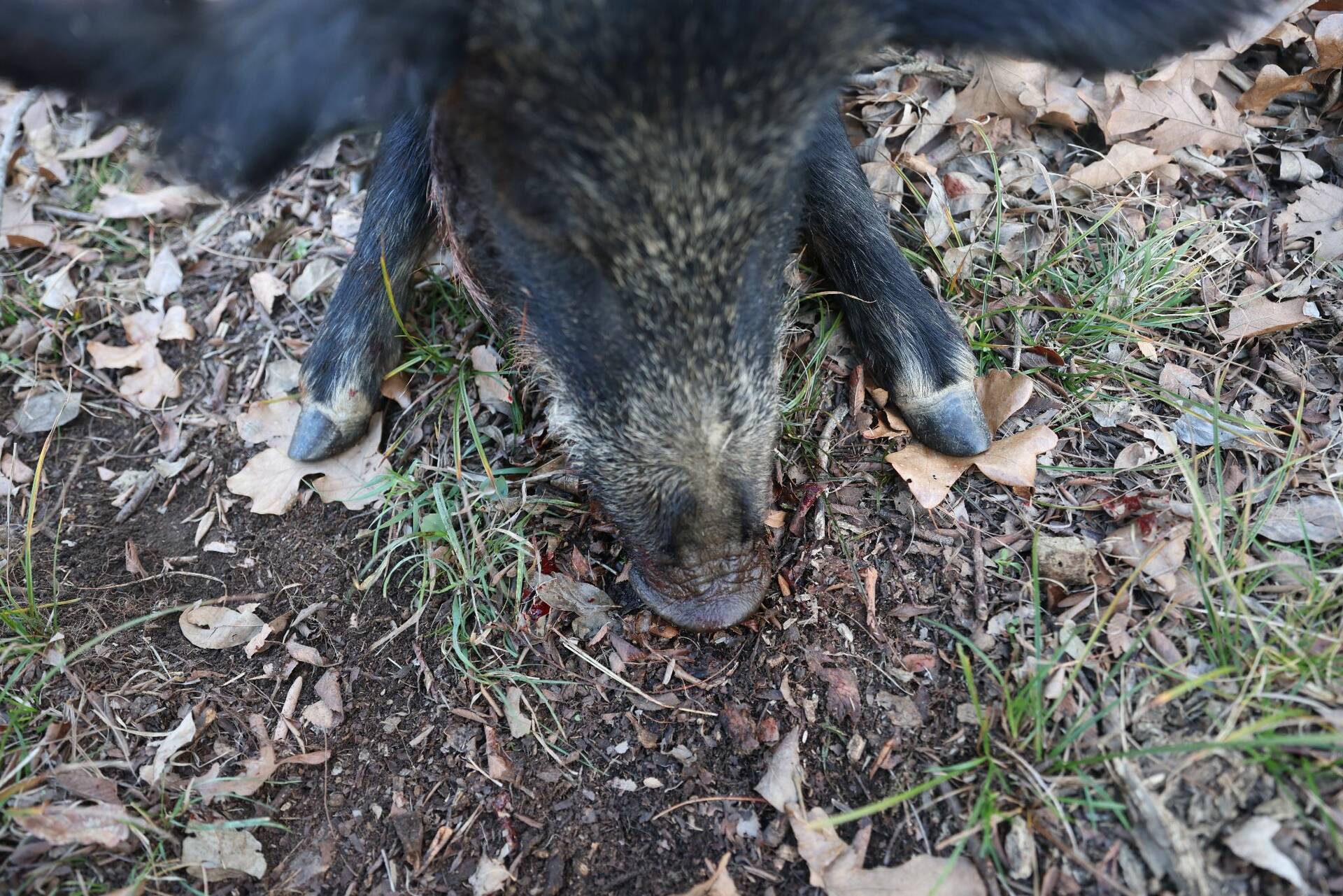
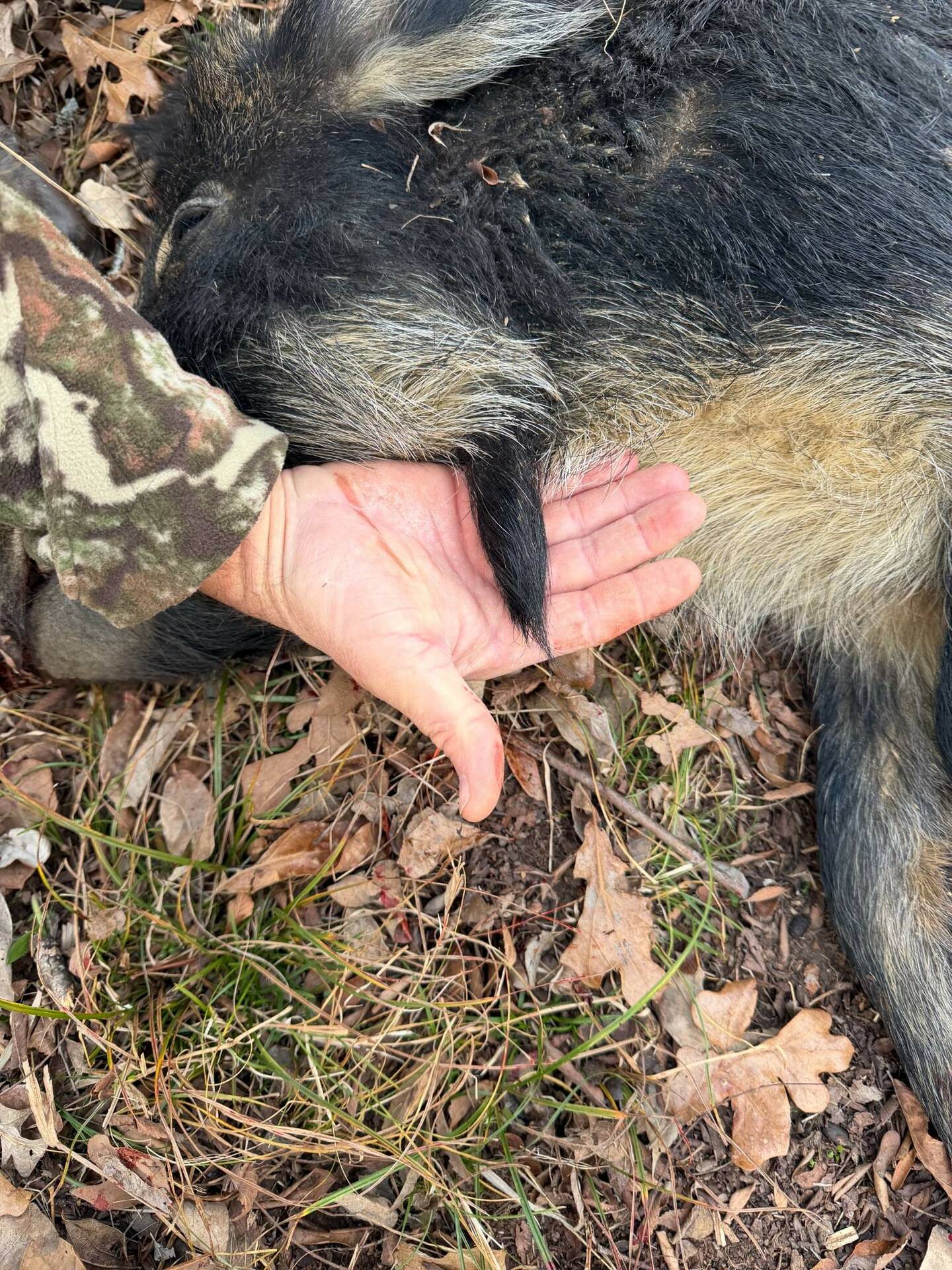
On the afternoon I arrived, Dusty filled me in on the Mule-footed hogs I might encounter. In particular, he pointed out that not only were the animals typified by solid hooves, but that they also possessed so-called wattles. These wattles are gristle appendages, two-to-four inches long, and covered with hair. This made the hogs even weirder, and thus of even more interest to me, but from a practical standpoint, since it was unlikely I’d be able to see their hooves clearly, their dangling accessories would help distinguish them from the unrelated, feral pigs also resident on the property.
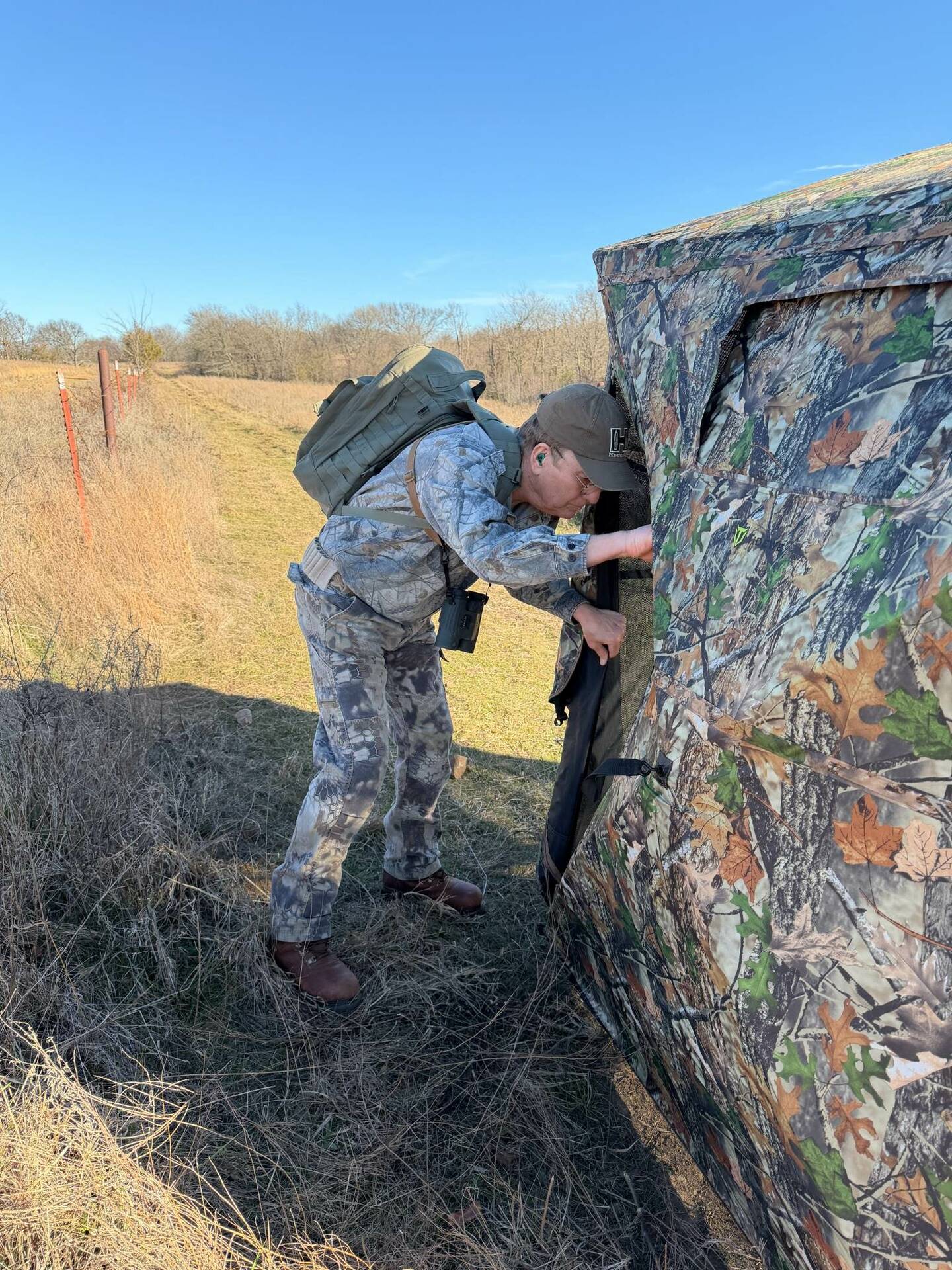
An hour after entering the blind, I was studying a large Choctaw Hog, its wattles dangling three to four inches below jawline, through the Blaser riflescope. The hog looked much lighter in color than the jet-black animals shown to me earlier. After several more days of hunting, I’d understand that the paleness of this hog resulted from his wallowing in gray mud. This being my first experience with watching these fascinating animals, and seriously worried of making a terrible mistake, I never moved the J.P. Sauer & Sohn 505’s safety to the off position. I watched the mule-footed hog for an hour, drinking water and rooting at less than 100-yards. Darkness found me internally kicking myself for likely passing up a golden opportunity.
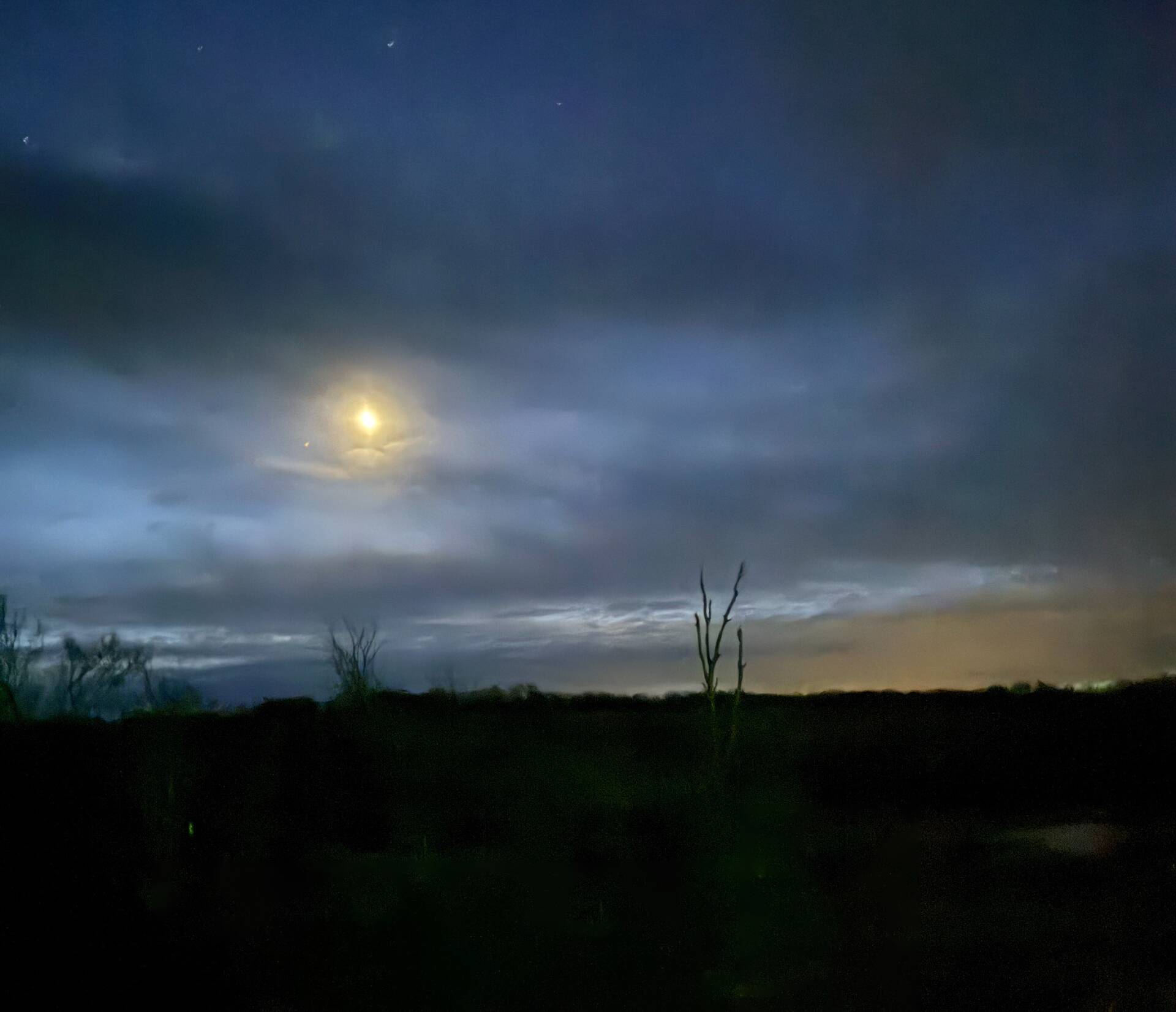
Fast forward two days, and several spells in other hides, and I was back in the first afternoon’s ground blind. Since that first evening, I’d watched magnificent Bison bulls graze within 10-yards of my location. I had also been witness to beautiful moonrises. However, no Choctaw Hogs made an appearance. This evening, the drought ended at around 4pm when a sounder of 15+ pigs appeared from the thick, oak-briar habitat near the distant feeder. The collection included an easily distinguishable, white, boar and sow. Dismissing them as non-shooters, I focused on the largest, black hog possessing prominent wattles. At the 125+-yard distance, I had no way of seeing the fusion of the animal’s hooves, but the long dangling appendages made its identification as a Choctaw animal straightforward. Classification might not have been an issue, but finding a shot opportunity, with it clear of the other animals, was. My chance to send the .308 Winchester’s 178-grain ELD-X topping the Hornady Precision Hunter cartridge toward my target came with 30-minutes of shooting light remaining; the hog stepped to the left of the closely packed herd. The rifle jumped with the report, and I saw the animal stumble as I chambered another round. I felt the shot was a good one, so my surprise was enormous as I watched the hog charge into the nearby brush.
I quickly headed down the slope, worrying that my shot was not good enough, given the well-earned reputation for toughness held by Choctaw Hogs. As I approached where the hog had stood when my shot rang out, I wondered if I would find my trophy in the nearby briars and trees, or just scuffed footprints of rapidly fleeing pigs. I found no blood where the animal stood nor along the trail they’d taken into the dense foliage. I did find the characteristic imprints of its solid hooves. As I slowly shouldered my way through the briars and chest high grass, I watched a dark mass rise slowly from the groundcover. Thankfully, instead of charging, the hog swapped ends for an escape. The Sauer barked again, and this time the animal dropped without a quiver.
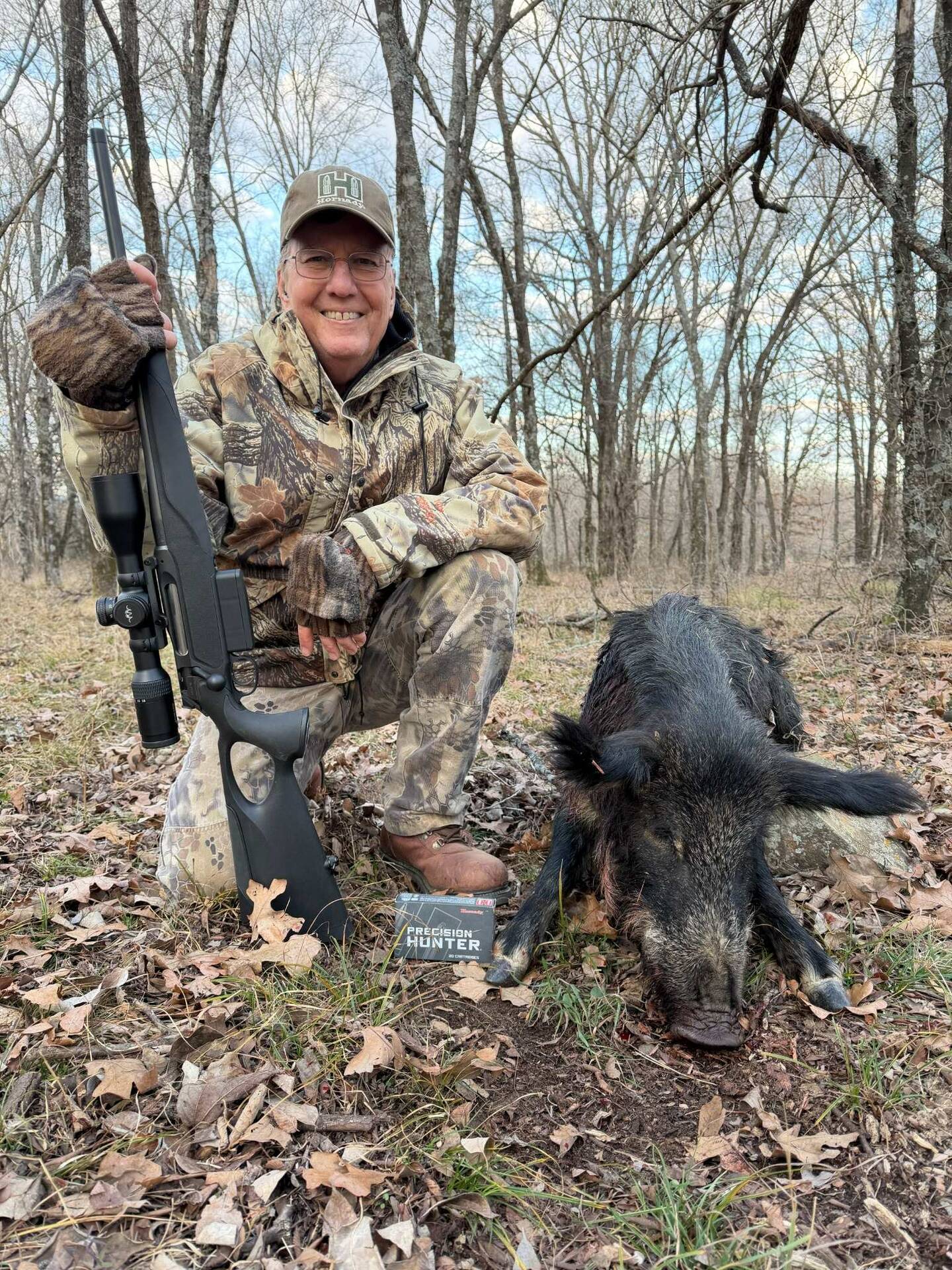
I knelt down beside this trophy that had come from such a long distance in space and time, saying a short prayer of thanksgiving. I lifted the wattles, and handled the horse-like hooves, smiling at the uniqueness of the animal. In Ruark’s words: I was a truly happy man.
Later, when Terry skinned the hog at the lodge, we discovered that the entry points of the first and second ELD-X bullets were just behind the shoulder, and only a handbreadth apart. Again, I smiled, this time with the realization that not only are Choctaw Hogs a truly unique and worthy hunting trophy, but also as tough as their European Wild Boar ancestors!
Mike Arnold is a professor in the Department of Genetics at the University of Georgia and author of the 2022 book, BRINGING BACK THE LIONS: International Hunters, Local Tribespeople, and the Miraculous Rescue of a Doomed Ecosystem in Mozambique. Mike’s newest book, BRINGING BACK THE WILD – Stories from Revitalized Ecosystems Around the World and How Sport Hunting Supports Them, appeared in June 2025. He is also the host of a podcast also titled, Bringing Back the Wild. You can find a description of Mike’s travels, talks, articles, podcasts, and books at mikearnoldoutdoors.com.