Introduced by Hornady in 2007, the 6.5 Creedmoor was developed by Hornady Senior Ballistics Scientist, Dave Emary and Dennis DeMille, the VP of product development for Creedmoor Sports. In this blog, we interview Dave to learn more about this popular cartridge.
Dave, how was the caliber conceived and how long did the development process take?
The cartridge concept came from a conversation between myself, Dennis DeMille and Joe Thielen of Hornady, at the 2005 National Matches at Camp Perry. Dennis was having a lot of problems with the 6 XC, with the non-standardized loading data causing lots of problems with stiff bolt lift and pierced primers. Bottom line was the 6 XC had to be loaded too hot, to give it the ballistics that the shooters wanted. Dennis said he wanted an off-the-shelf cartridge that was accurate enough to win, with less recoil than the .308 for rapid fire barrel life, comparable to the .308 and with the loading recipe on the box label.
It’s very hard to surpass the ballistic performance of 6.5 projectiles as far as low drag and velocity potential goes, so we decided very early to go with 6.5mm caliber. The .30 TC was a new cartridge at the time and gave us a well-designed case, with short enough length to allow the very long ogive 6.5mm bullets to stay within a short action, magazine length restriction. The case capacity of the .30 TC parent case also was optimum for good barrel life and good velocity with 140 grain class projectiles. The case capacity was also perfect for 4350 class propellants that we knew gave very good accuracy and velocity.
Joe and I worked on this for approximately a year to get what we wanted. The design and development was a joint effort between myself and Joe.

6.5 Creedmoor ELD Match 140gr illustration
Where did the name Creedmoor come from?
Dennis wanted to honour the original international Creedmoor Matches and also give a plug to Creedmoor Sports where he’s the General Manager.
What makes this cartridge unique?
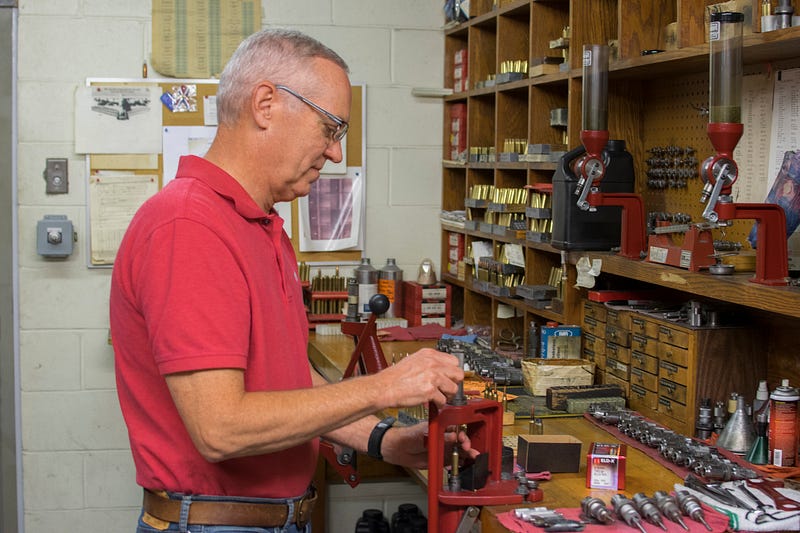
The 6.5mm Creedmoor has minimum body taper and a 30 degree shoulder, allowing it to “center-up” well in the chamber and minimize Principle Axis Tilt (PAT) between the projectile and the bore, which improves accuracy potential. The Creedmoor has a .2645” and .100” long freebore with a 1.5 degree lead. This allows for the use of very long projectiles without intruding into the powder column and staying within short action magazine length. The tight throat also serves to further limit the possibility of any PAT, further increasing the accuracy potential of the cartridge. The Creedmoor was designed with a 1–8” twist, which allows the use of the heaviest bullets available in 6.5 mm.
What was the caliber specifically designed for?
We originally envisioned it as a target/match cartridge that would have good longer range performance. We quickly realized it would also make a superb medium weight hunting cartridge.
Has the original intended purpose of the caliber changed since it was first released?
I would say it has evolved rather than changed.
What distances can be realized with the cartridge?
I shoot it regularly out to 1,200 yards and it does very well. I know of a number of shooters who’ve had good success with it well beyond this. Our new 147 grain ELD™ Match bullet is supersonic to 1,400 yards at sea level from the Creedmoor.
In terms of applications, what is the cartridge suited for?
It’s a superb target and match cartridge to 1,200 yards. It’s also a very effective hunting cartridge on game up to the size of American elk and African kudu to ranges of 600–650 yards.
In the range of 6.5 Creedmoor bullets, what would you recommend for hunting different species?
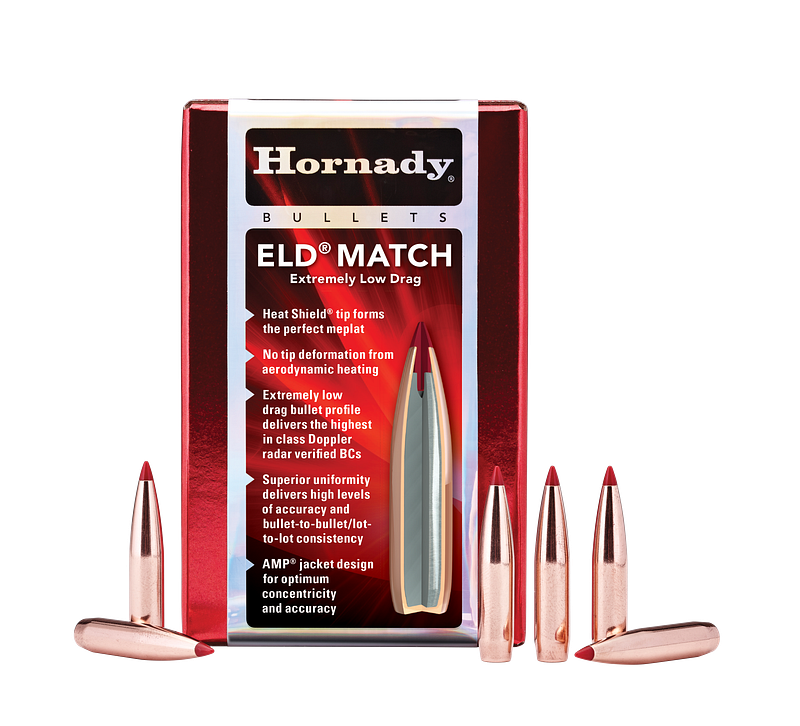
For varmints I would use 100–120 gr bullets. For larger game I would use 130–143 grain bullets. Our 143 gr ELD™ X bullets would be my choice for anything up to the size of elk. The 120 grain monolithic copper bullets are also a great choice for anything to the size of elk.
For target shooting, which bullets would you recommend for different distances?
The 130 grain weight class of bullets is a very good choice for anything out to 600 to 800 yards. Beyond that I would go with the 140 grain or heavier class bullets.
Have you any plans to further extend the Creedmoor family, beyond the 6mm Creedmoor?
Not right now.
How well has the caliber has been received in the USA and internationally?
The cartridge has been an enormous success. Virtually every gun and ammunition manufacturer I know of, are now chambering for it or offering ammunition.
What has been your most memorable hunt with the 6.5 creedmoor?
I was very fortunate to go to Africa in 2010 on a plains game hunt, with the Creedmoor with the then new 120 grain GMX Superformance™ load. This was the hunt of my lifetime. It was rather funny as the professional hunter looked at my little cartridge, scoffed and said “you’re not going to be able to kill much with that”. He then asked how well I could shoot and put up a target at 100 meters on a fence post. I shot off his headache rack and shot a three-shot cloverleaf group, with all the bullets touching. He then said, “ok you can shoot”. After taking a wildebeest and a kudu at nearly 400 yards, with one shot, he wasn’t a doubter anymore. We then proceeded to take seven animals in a week without a miscue. He certainty wanted a Creedmoor by the end of the hunt!