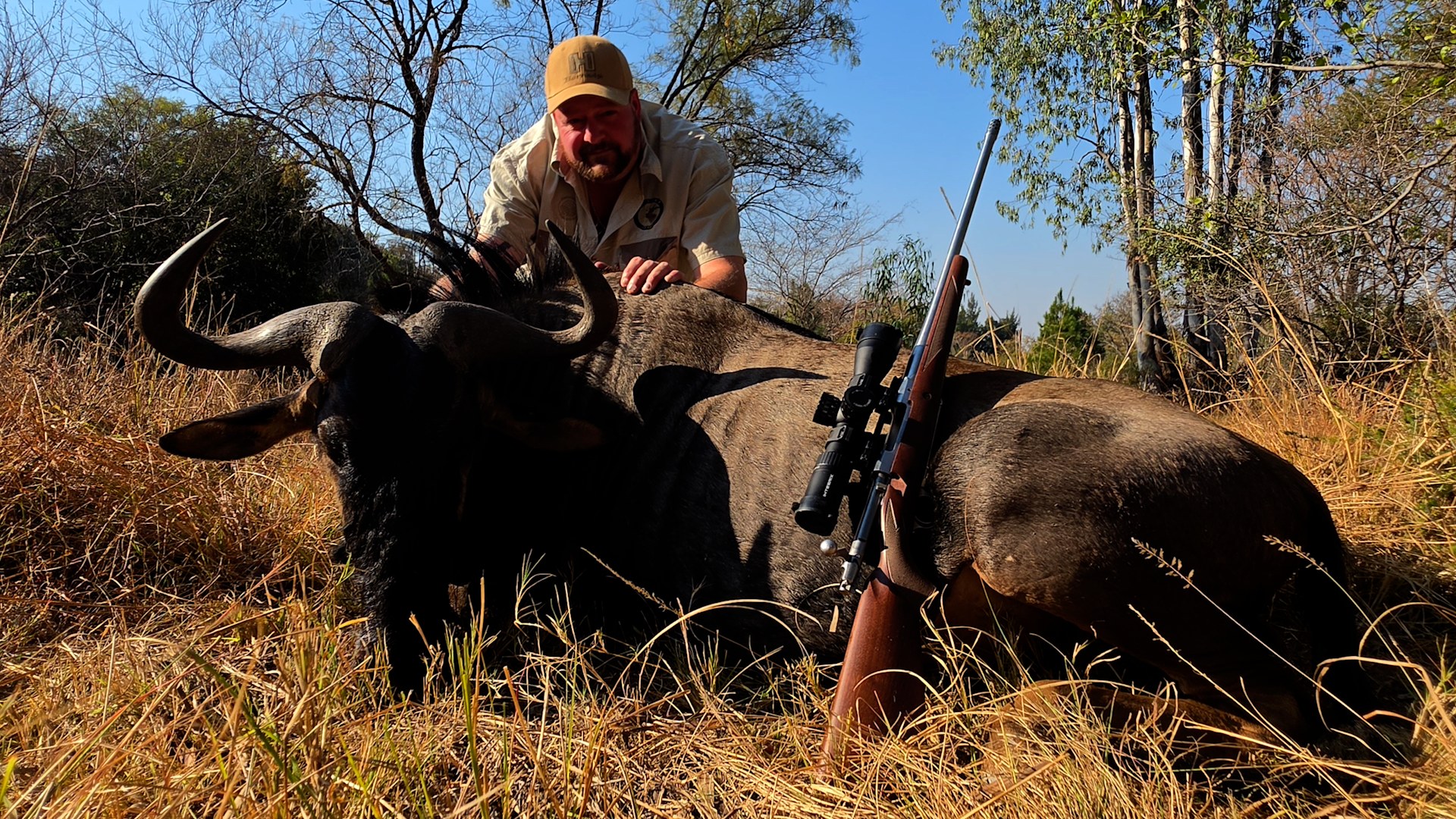
Hornady, Ruger & Integrix - The All-American Hunting Trio
9 min read • 23 September, 2026Following a successful field test of Hornady American Whitetail 6.5 Creedmoor ammunition on blesbuck in 2025, Andre van Dyk and his team were invited to put another Hornady load through its paces.
This time, the focus moves to the .300 Win Mag and Hornady Superformance ammunition loaded with the SST (Super Shock Tip) bullet, with blue wildebeest providing a considerably different field test. Andre shares how the ammunition performed, while also taking a brief look at the Ruger Hawkeye rifle and Intergrix 4-18x50mm scope used for the hunt.
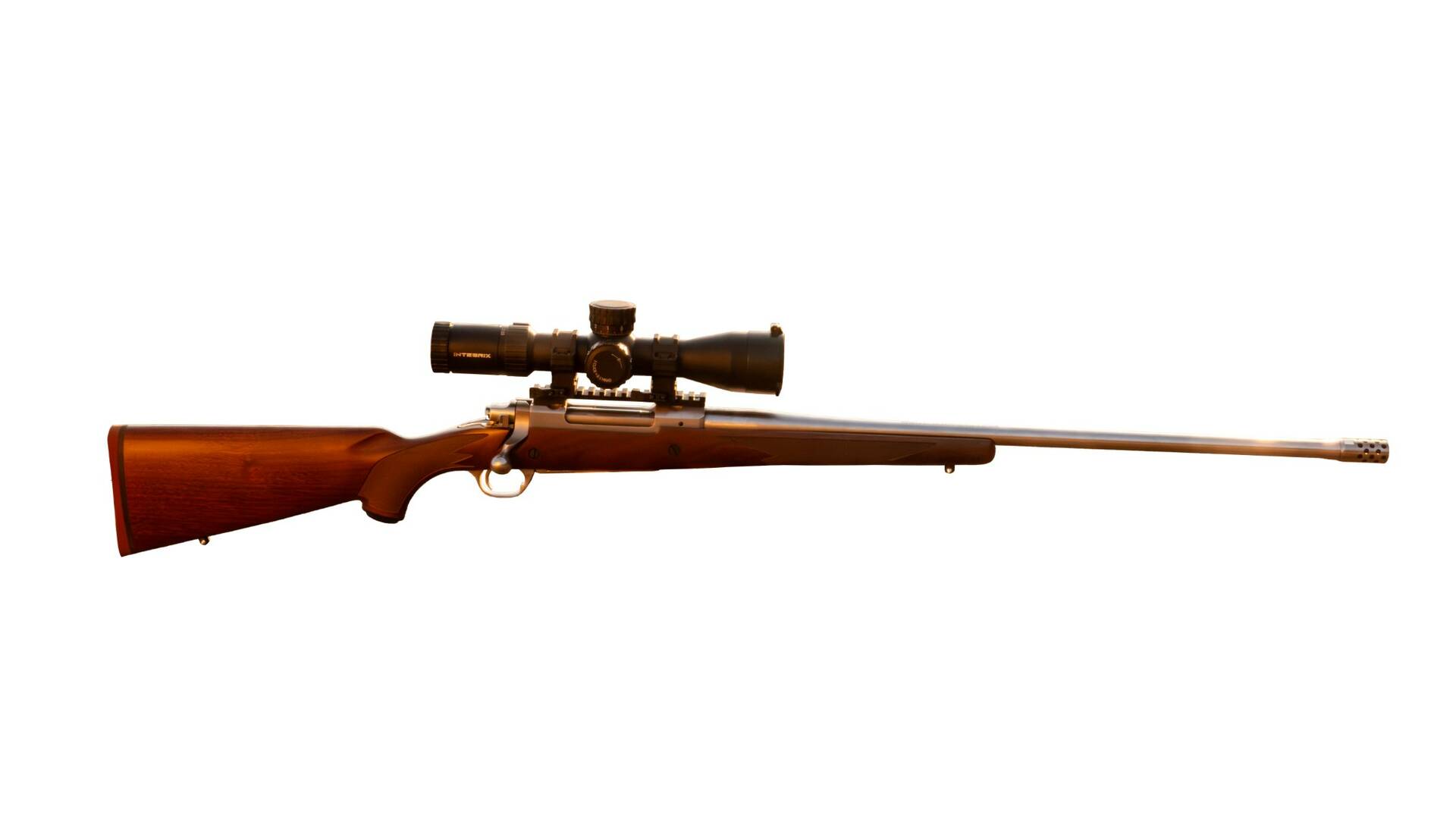
Ruger Hawkeye
The Ruger Hawkeye is a well-established hunting rifle known for its reliability, craftsmanship and precision. Ruger has been serving hunters and firearm enthusiasts since 1949, building a reputation for quality and innovation over more than seven decades.
The Hawkeye’s stainless steel barrel offers strength and corrosion resistance for use in demanding hunting conditions, while its Mauser-style controlled-round-feed action provides reliable chambering and extraction. It is a combination that has made the Hawkeye a trusted hunting rifle around the world.
Integrix 3-18 x 44mm scope
For this test, the Ruger was paired with an Integrix 3-18 x 44mm scope, giving us plenty of flexibility for the different distances we expected to encounter.
The scope uses fully multi-coated lenses and a 44mm objective lens, with magnification ranging from 3x to 18x. It also features windage and elevation turrets, side parallax adjustment and an illuminated reticle option. Its aluminium housing is waterproof, fog-proof and shockproof, making it well suited to hunting conditions.
Hornady – Accurate, Deadly, Dependable
Hornady Manufacturing Company was founded by Joyce Hornady in Nebraska in 1949, with a vision to produce high-quality bullets for reloaders. His motto, “Accurate, Deadly, Dependable,” became the foundation of the brand and remains at the heart of the company today.
The .300 Win Mag
The .300 Winchester Magnum, commonly known as the .300 Win Mag, was introduced in 1963 and has since earned a worldwide reputation among hunters and long-range shooters for its power, flat trajectory and versatility.
Developed from the .375 H&H Magnum case, it was designed to fit standard-length rifle actions while delivering excellent velocity and energy. More than 60 years after its introduction, the .300 Win Mag remains a popular hunting calibre, particularly where power and performance at longer distances are required.
Hornady Superformance ammunition
Over the years, I have learned that the ammunition a hunter uses is of paramount importance. There is little benefit in owning an excellent rifle and scope if you pair them with inferior ammunition. This is where Hornady’s “Accurate, Deadly, Dependable” motto comes into its own.
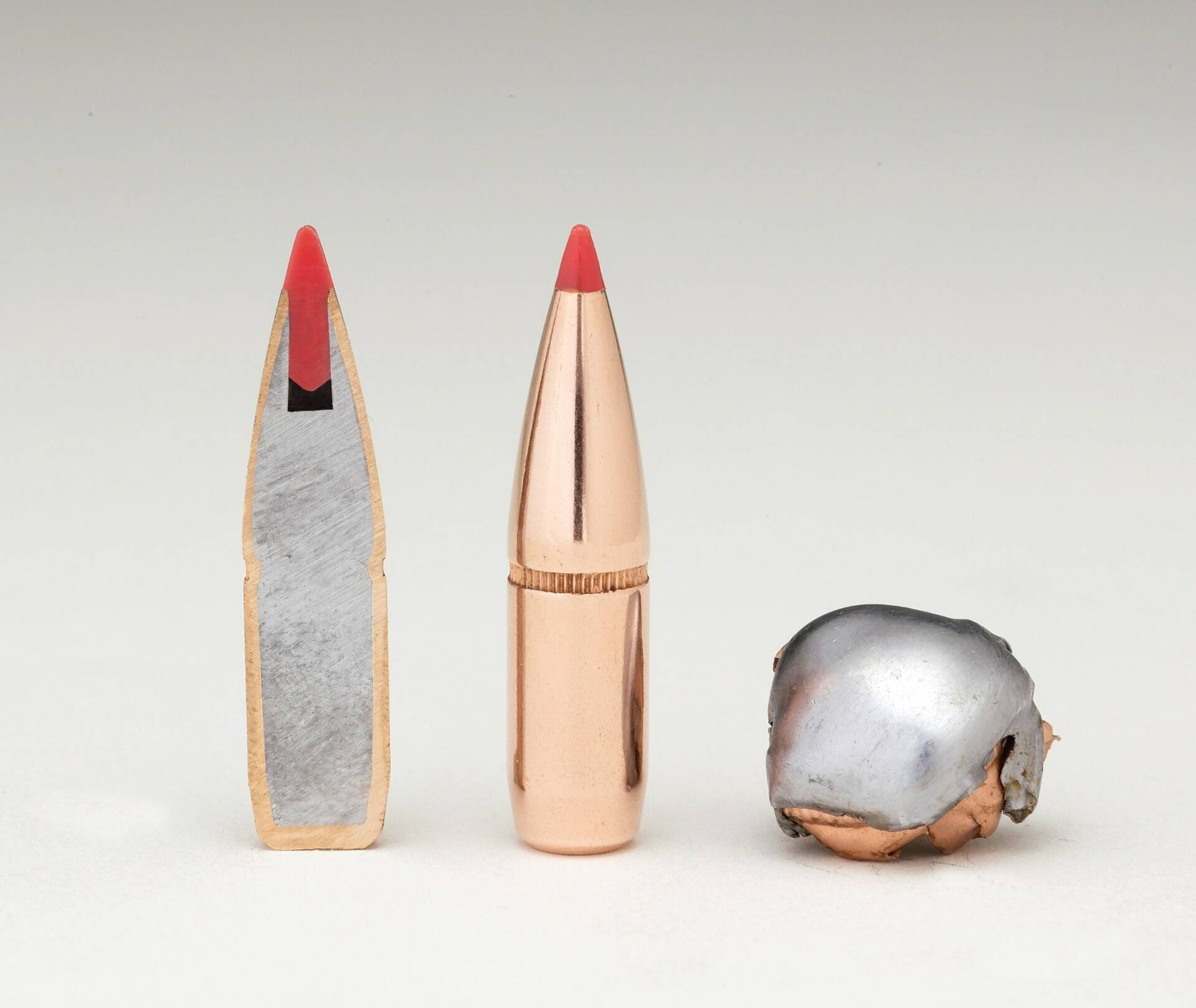
For this test, we used Hornady Superformance ammunition loaded with the 180-grain SST (Super Shock Tip) bullet. The SST is designed to deliver tremendous shock on impact while expanding quickly and reliably, particularly at higher velocities.
Flat shooting and accurate, it is suited to medium and larger African game, including blue wildebeest, kudu and eland, as well as many other African plains game species.
The blue wildebeest
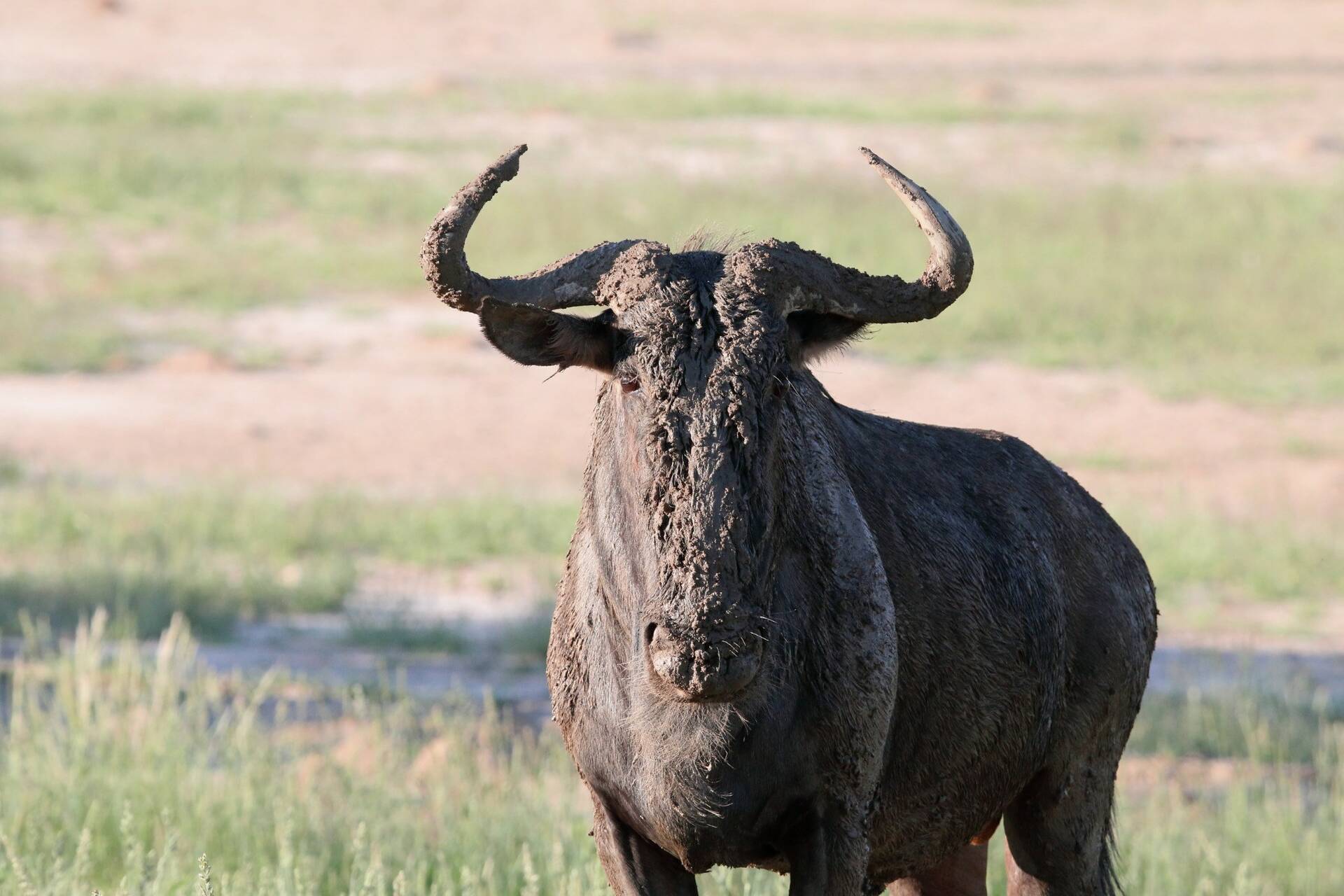
The blue wildebeest that roams the plains of Africa is one of the toughest animals to put down successfully. It may be easier to spot and track than a kudu, but once you have a blue wildebeest in your scope, you need to be absolutely certain of your shot placement if you want a quick, clean and effective kill.
The blue wildebeest is often called the “poor man’s buffalo”. It didn’t earn this nickname because it looks like a buffalo, but because, pound for pound, it is probably one of the toughest animals to bring down. Hunters therefore need to make sure they are using a suitable calibre and ammunition and, just as importantly, pay close attention to shot placement.
It helps to understand the position of the vital organs inside the wildebeest’s body:
-
The brain is positioned high in the skull, close to the horn bases, and occupies a relatively small area.
-
The neck vertebrae are located in the lower half of the neck.
-
The oesophagus is positioned quite low in the neck.
-
Where the neck vertebrae meet the spinal vertebrae, the spine curves sharply downwards. Above this area is a large space with no major vital organs.
-
The dorsal spines extending above the vertebrae are long, with large gaps between them.
-
The breastbone is thick, and the tip of the heart rests against it.
-
The location of the digestive organs is similar to that of most other antelope species.
-
The lungs surround the heart and extend forward over the front section of the stomach, reaching high towards the spinal column.
-
The stomach occupies more than half of the body cavity.
One valuable tip: never underestimate a blue wildebeest. It is incredibly tough and may well be one of the toughest animals you encounter during your hunting career.
Our hunting rig
For the test, our set-up was:
Rifle: Ruger Hawkeye
Barrel length: 24 inches
Twist: 1 in 10 inches
Scope: Integrix 3-18 x 44mm
Ammunition: Hornady Superformance 180-grain SST
Hornady provides the following ballistic information for this ammunition when fired through a 24-inch barrel:
|
Distance |
Velocity (fps) |
Energy (ft-lb) |
Trajectory (inches) |
|
Muzzle |
3,130 |
3,915 |
-1.5 |
|
100 yards |
2,926 |
3,422 |
+1.3 |
|
200 yards |
2,732 |
2,983 |
0 |
|
300 yards |
2,546 |
2,591 |
-5.9 |
|
400 yards |
2,368 |
2,240 |
-17.2 |
|
500 yards |
2,196 |
1,928 |
-34.8 |
With a muzzle velocity of 3,130 fps and the rifle zeroed at 200 yards, the figures indicate that the bullet will be 1.3 inches high at 100 yards, 5.9 inches low at 300 yards and 17.2 inches low at 400 yards.
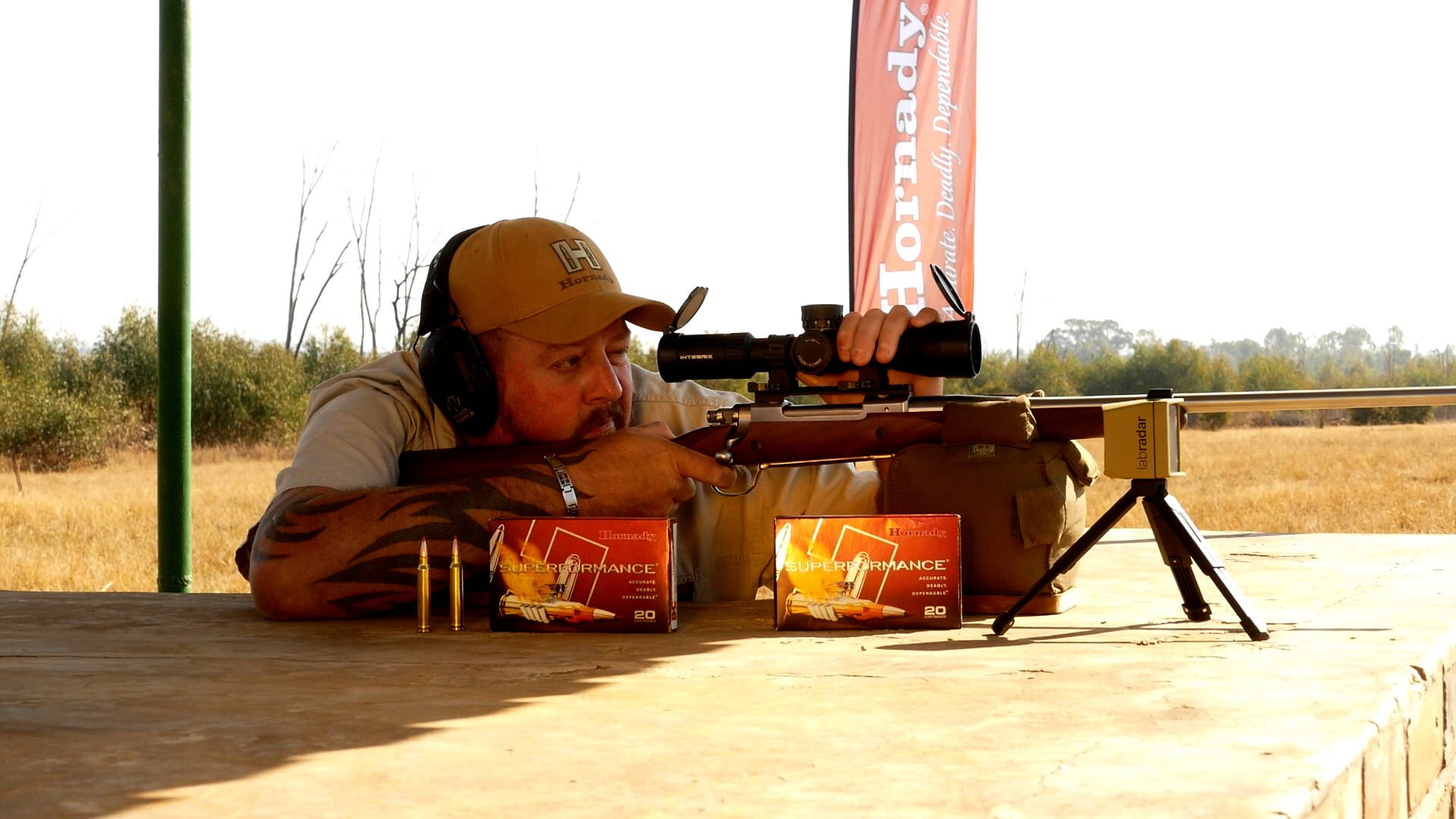
We decided to put these figures to the test on the shooting range, and the results were impressive. According to our LabRadar chronograph, there was only a 10 fps difference between Hornady’s published information and our practical reading on the range.
Andre Jnr also managed to shoot an excellent 15mm group, and we were convinced that, on paper, the .300 Win Mag Superformance ammunition was as accurate as we could ask of a factory hunting load.
Our own penetration test
Hornady has carried out its own penetration testing using ballistic gelatin, but before the hunting commenced, we decided to conduct a test of our own with the SST – the South African way!
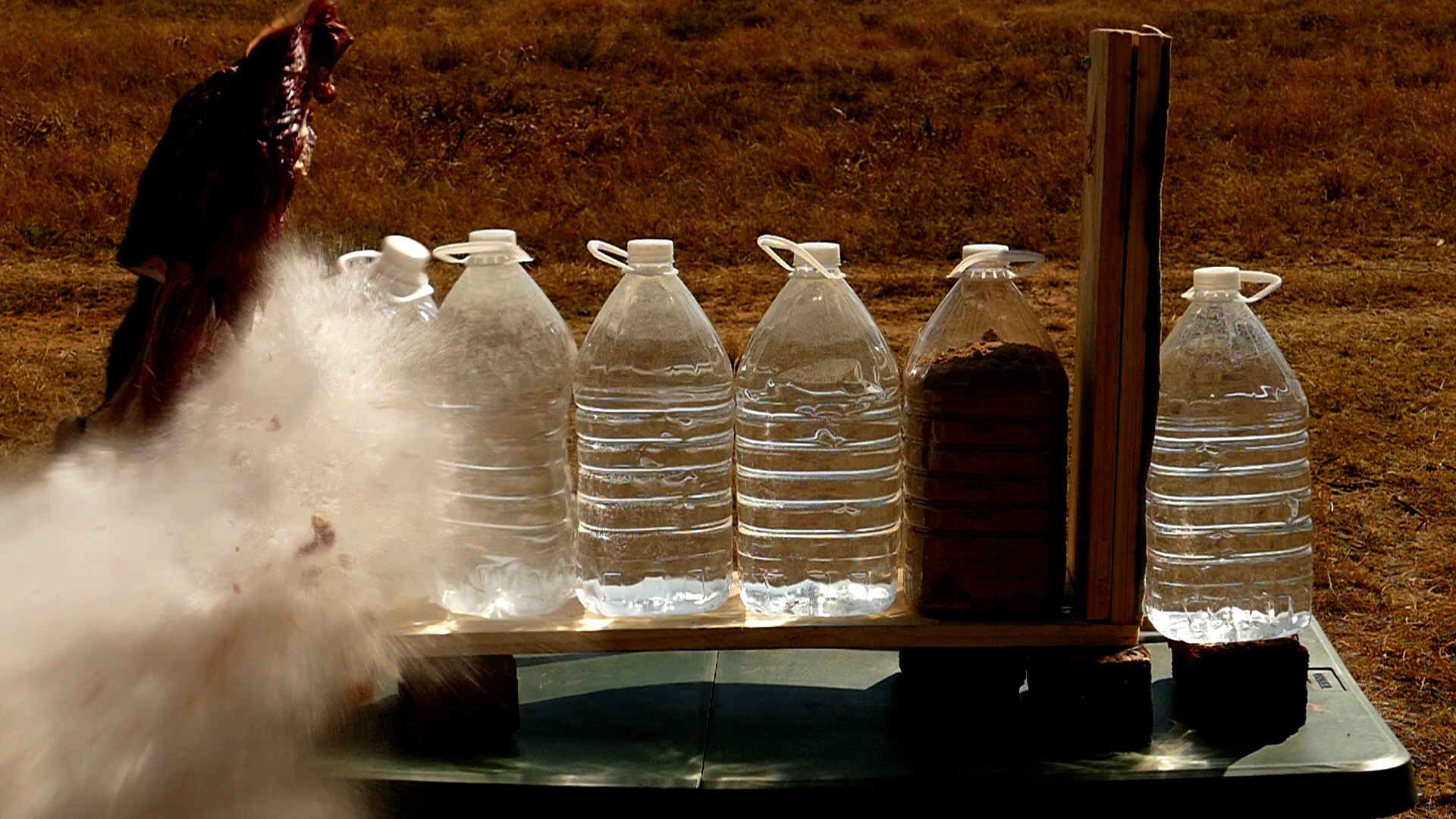
We used a blue wildebeest shoulder with the skin still on, a couple of water containers and a backstop filled with sand. Everything was aligned on the shooting range 100 metres from the shooting point, and we made a small aiming mark on the skin to make sure the bullet would hit the shoulder bone at its thickest point.
With great anticipation, Andre Jnr fired the shot. When the 180-grain Superformance SST bullet hit the shoulder, the bone virtually exploded and broke in half, and the bullet continued straight through the first water container.
Unfortunately, we couldn’t retrieve the bullet because it missed the second container, something we put down to our own poor alignment of the test set-up. Even so, we were satisfied with what we had seen and ready to put the ammunition to the test on wildebeest.
Putting it to the test
All the hunting took place at Nooitgedacht Safaris, just outside Naboomspruit in Limpopo Province. We chose Nooitgedacht because plenty of wildebeest roam the 3,500-hectare property and the vegetation varies between dense bush and open grassland, giving us an excellent setting for the tests.
Blue wildebeest no. 1
Time: 15:15
Distance: 270 metres
Impact velocity: 778 m/s (2,551 fps)
Impact energy: 3,534 joules (2,600 ft-lb)
Trajectory: -11.2cm (-4.5 inches) from line of sight
Temperature: 21°C
Wind: Slight breeze towards us; we ignored the wind.
Shot placement: The animal was standing broadside with its head turned towards us. The bullet struck the thick part of the right shoulder.
Reaction: It bolted forward and stumbled slightly before recovering and disappearing into the bushes.
Distance travelled: Approximately 40 metres.
Entrance wound: Thick part of the right shoulder.
Exit wound: Just behind the left shoulder on the opposite side.
Total carcass weight: 108kg.
Damaged meat: 3.3kg, approximately 3% of the total carcass weight.
Although the carcass initially looked bloody, we discovered that much of this was under the skin after we had dragged the wildebeest approximately 20 metres to reach the vehicle. Once this was removed, the inside of the carcass was virtually blood-free.
Blue wildebeest no. 2
Time: 17:10
Distance: 195 metres
Impact velocity: 825 m/s (2,703 fps)
Impact energy: 3,969 joules (2,920 ft-lb)
Trajectory: +0.5cm (+0.2 inches) from line of sight
Temperature: 17°C
Wind: Slight breeze from the left; we ignored the wind.
Shot placement: The animal was angling slightly away from us. The bullet struck the left shoulder.
Reaction: It stumbled and moved off to the right. We could clearly see that it was hurt.
Distance travelled: Approximately 20 metres.
Entrance wound: Just behind the left shoulder.
Exit wound: Just behind the right shoulder on the opposite side.
Total carcass weight: 117kg.
Damaged meat: 1.4kg, approximately 1% of the total carcass weight.
There was less visible blood than with the first animal, as we did not need to drag the wildebeest to reach the vehicle.
Blue wildebeest no. 3
Time: 07:30
Distance: 165 metres
Impact velocity: 844 m/s (2,760 fps)
Impact energy: 4,154 joules (3,045 ft-lb)
Trajectory: +2.9cm (+1.12 inches) from line of sight
Temperature: 14°C
Wind: No wind.
Shot placement: The wildebeest was standing angled towards us and the bullet struck its right shoulder.
Reaction: It jumped forward, and we could immediately see that the shoulder was broken.
Distance travelled: Approximately 70 metres.
Total carcass weight: 67kg.
Damaged meat: 1.5kg, approximately 2% of the total carcass weight.
Visible blood: Very little.
What did we learn?
All three blue wildebeest went down with single shots. The first two were shot through both lungs, while the third was hit through one lung, which explains why it travelled a little further before expiring.
All three shots were taken at distances of less than 300 metres. Knowing that our zero was 200 metres meant we were able to aim where we wanted to place the shot without making significant adjustments.
We also shot a fourth wildebeest with a frontal head shot. In this case, there was no meat damage, and once again we were unable to retrieve the bullet.
We learned a great deal from the exercise. Perhaps the most striking result was that the 180-grain SST Superformance bullets kept penetrating to such an extent that we were unable to retrieve a single one.
For me, though, bullet recovery matters far less than what happens in the animal. We saw good penetration and effective wound channels, while the amount of damaged meat remained low. Across the three animals detailed above, meat damage averaged around 2% of carcass weight.
Conclusion
I have trusted Hornady throughout my hunting career because its ammunition has proved to me that it is Accurate, Deadly and Dependable.
After this exercise, I would happily call the Ruger Hawkeye in .300 Win Mag, paired with the Integrix 3-18 x 44mm scope and loaded with Hornady 180-grain SST Superformance ammunition, my personal blue wildebeest combination: The All-American Hunting Trio – one that works very well in Africa.
The Ruger Hawkeye, Hornady ammunition and LabRadar chronograph were supplied by Guns & Bows of Cape Town. The Integrix scope was supplied by National Cartridge of Pretoria. Our sincere appreciation goes to Hornady for supporting us in this exciting project.