Black Bear During the Season of the Painted Leaves
9 min read • 14 October, 2026Autumn black bear country is alive with clues: tracks pressed into the mud around a waterhole, acorns ripening on the oaks and the occasional dark shape moving across a distant slope. For the latest update on The Hole Story blog, Larry Weishuhn looks back on memorable hunts across New Mexico, Saskatchewan and British Columbia, including bears taken with Hornady handloads and one called-in boar that came much closer than anyone expected.
Many years ago western states had spring black bear hunting seasons. Then things changed. The only time black bear could be hunted in most states was during “the season of the painted leaves.”
My first real fall bear hunt took place on the Bachelor Ranch near Ruidoso, New Mexico, back in the late 1970s. Back then my dad, Lester, and our cousin Crockett Leyendecker owned some mighty fine ‘coon hounds. They were mostly black & tans, blueticks, and treeing walkers. To prepare them for bear, we live-trapped several raccoons and doused them in bear scent before releasing them. Our hounds soon learned the scent of black bears. After the hounds treed them, we caught the raccoons with a snare. A few days later, after again dousing them with bear scent, we released them, then put our hounds on their trail. After doing this several times, our hounds “figured out” what they were supposed to do. We soon turned our ‘coon hounds into bear dogs.
The last time we released the ‘coons and our hounds treed them, we left them in the tree. I often wondered how they were received by the local raccoons, with them smelling like black bears.
During our initial bear hunt to New Mexico, we hunted with hounds in the morning, following them on horses we had brought with us from home. On the first morning of our hunt, Crockett shot a bear our hounds treed. That afternoon we sat on waterholes. New Mexico game warden friends Ron Porter and Bill Montoya had told me bears tend to water daily, most of the time late in the afternoon. That is how I took my first black bear, sitting near a remote water hole surrounded by fresh bear tracks. I sat next to a large pine where I could see the pond and anything approaching it. On the second afternoon of doing so, I shot a bear with my .270 Winchester shooting Hornady handloads. I was hooked on hunting black bear!
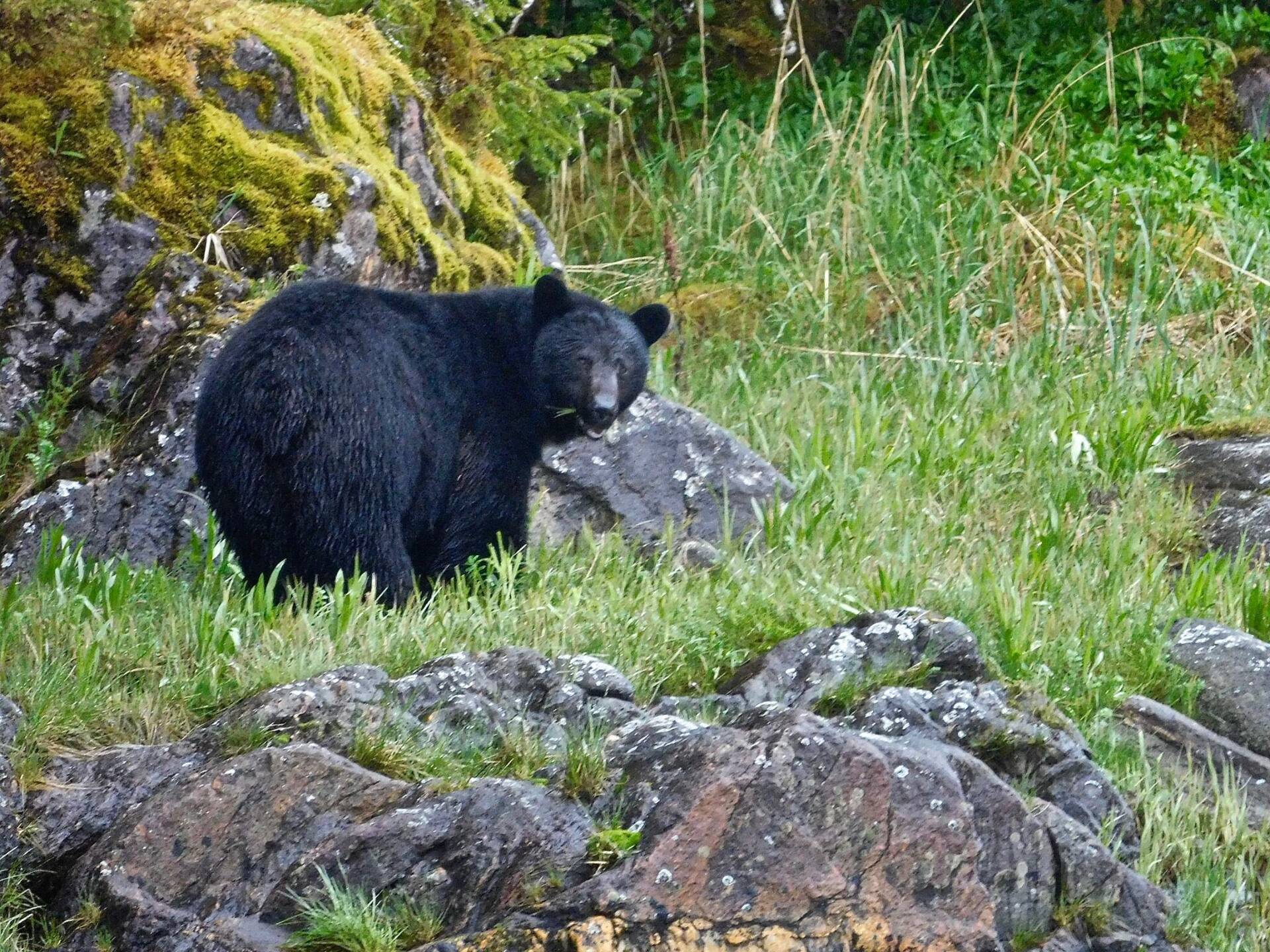
My second fall black bear came while hunting whitetails in Saskatchewan, Canada. During a deer drive, I spotted the sizeable bear walking slowly, well ahead of the drivers. One shot from my .270 Win, again loaded with Hornady handloads, dropped the 250-pound bear in his tracks.
The following year I started hunting fall black bear in northern New Mexico on the south-facing slopes of Johnson Mesa with Richard Petrini’s TriState Outfitters USA. This was before his son, Bridger, took over the outfitting business. The primary areas I hunted were three canyons that “flowed” south toward wide-open pronghorn antelope habitat.
One year, while hunting pronghorn after taking a nice buck with one of my handguns, I decided to scout for black bear. The bear season was still several weeks away, but I knew I would be returning once the season got underway. I sat on a ridge where I could watch several “oak tree flats.” The oak trees were loaded with acorns, although they were not ready to start falling for at least three or so weeks. Sitting on the ridge, I also occasionally glassed the wide-open prairie to the south. Doing so, I spotted a very small dark spot miles away. I cranked my spotting scope up to 45x. In spite of a tremendous amount of wavy mirage, I could tell the dark spot was a big brown-colored bear. He was heading my way. For the next couple of hours, I occasionally checked on the bear’s progress coming toward me from many miles away. Two hours after first spotting the bear, it walked within less than a hundred yards of where I was sitting. It indeed was a dark brown, not quite chocolate, huge boar. I estimated he weighed north of 350 pounds. Once he passed me, he slowed his walk, then stopped in the shade of the oaks. He looked skyward at the abundant acorns, but apparently knew they were not yet “ripe.” I lost sight of him for a while but then saw him walking toward “the” water hole. He drank heavily, then walked into the water and started splashing before lying down so only his nose, eyes and ears were visible. A half hour later, he walked out of the pond, then lay down to sleep under a rock outcropping. He was still there when I left a little while before dark.
The next afternoon I sat close to the waterhole, hoping to film any bears that might come to drink. After long serving as a frequent guest on numerous outdoor television shows, I had just started my own first television series, “Hunting The World.” For several years it aired on the Outdoor Channel before I turned it into “Thompson/Center Adventures” and later “Thompson/Center’s Game Trails.” That afternoon, not only did I film the big brown bear, which appeared in the show’s opening, but I also filmed five other bears that came to water.
Back at camp I told Richard about the bear and suggested if he had a bear hunter coming in opening weekend, he put him or her where they could watch the water hole where I had seen the big bear. He did. Dan Moultrie’s daughter shot that particular bear. He weighed just shy of 375 pounds. His hide squared over 7 feet and he had an almost 22-inch skull, easily putting him in the Boone & Crockett record book.
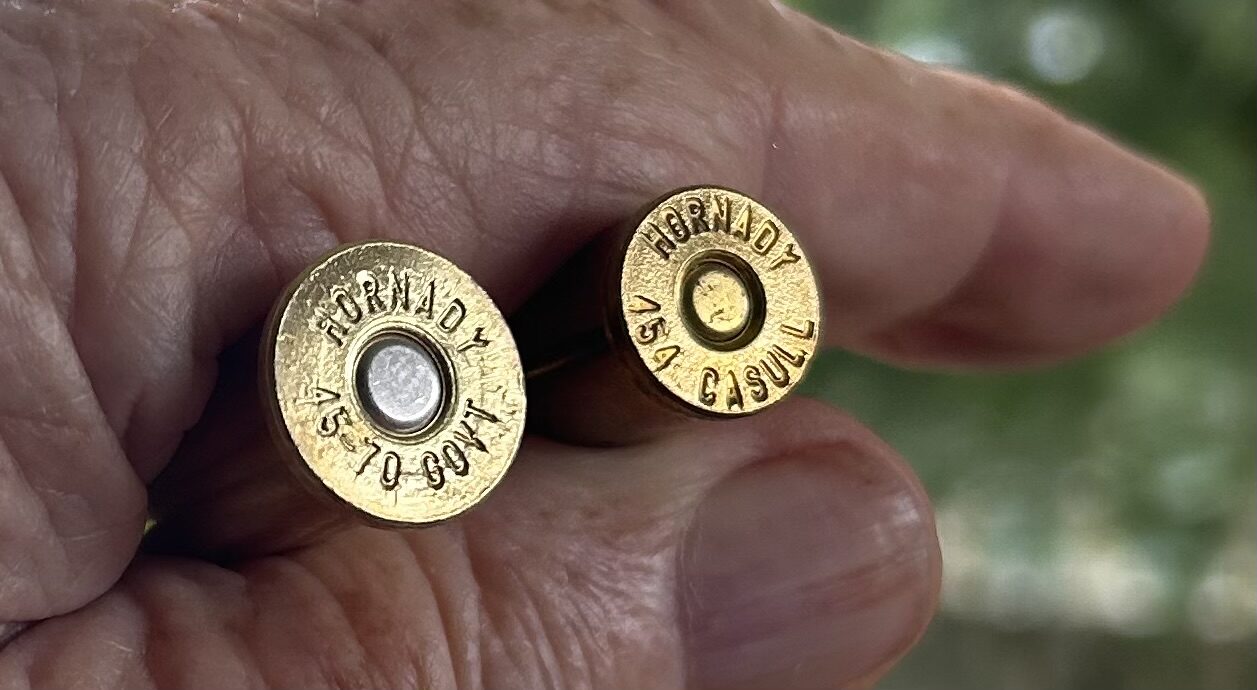
It was at that same waterhole that I shot a nice, about 225-pound black boar, on the second afternoon of my bear hunt that same fall, a week after the big bear had been taken. The gentle slopes south of the waterhole were covered with acorn-producing oak trees. They produced a tremendous mast crop every year. Black bear, mule deer and elk were always thick in the area. Nearby was “the” water hole, which never went dry, even when other ponds became dust bowls. Every fall for several years, I shot bears in the immediate area of “the” waterhole, including one I watched crawl into one of the bigger oaks to eat acorns. I shot him with a .454 Casull handgun using a Hornady 240-grain XTP.
The fall bears I shot in northern New Mexico always had prime coats. And going into the fall, they were always fat. That meant “bear tallow” to render into cooking oil and meat for the freezer, including bear sausage. Did I mention “bear grease” is some of the best cooking oil to be found anywhere?
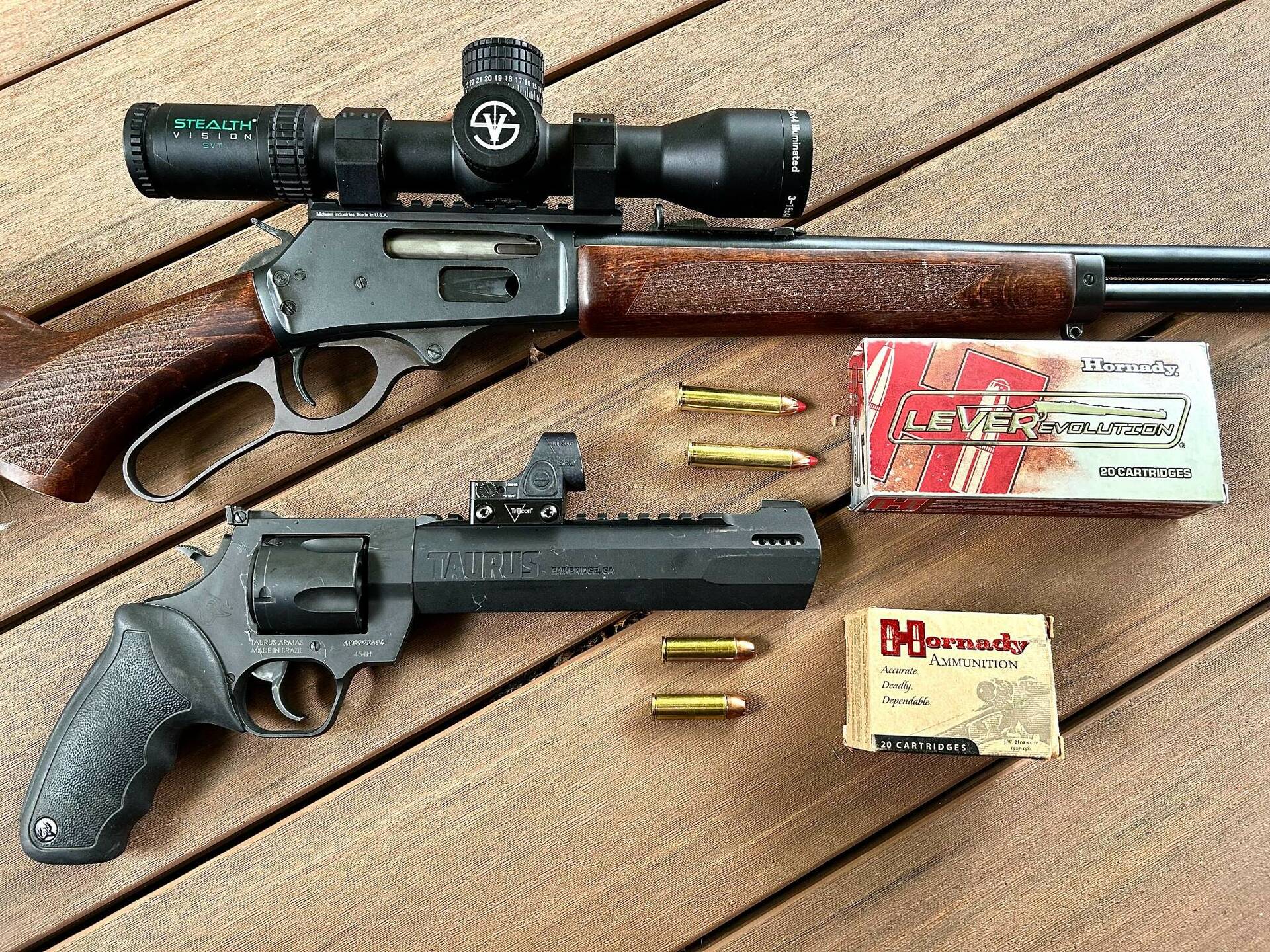
During those years I hunted with a variety of muzzleloaders, rifles and rounds, as well as numerous handguns, including a Taurus Raging Bull chambered in .454 Casull. I used a Hornady 240-grain XTP bullet handload. It was topped with a 1.5-4X LER Simmons scope. With that combination, Taurus/Hornady/Simmons, I could put all bullets essentially in the same hole at 50 yards.
My Taurus shot came when the coal-black bear turned broadside, 35 yards away. He was looking to the left. I brought the vertical crosshair up the front leg, then I moved it a good 6 inches or so behind the shoulder, the horizontal crosshair just below midway from top to bottom of the bear. I squeezed the trigger. The bear bit at his side and started spinning. I shoot quickly, but before I could put another shot into him, he went down and did not move another muscle.
One of my favorite ways to hunt bear during the fall is as was just described: find a waterhole around which you find a lot of bear tracks. Upon finding such a pond, I walk around the edge and, with a stick, poke every bear track I see, marking them so I can later easily distinguish fresh tracks.
I know…I could use trail cameras. But I like doing things “old school”! And I like to be surprised by what I see later when hunting.
While I have mostly hunted waterholes during the fall black bear seasons, I have also called them with a mouth-blown predator call. Many years ago, Judd Cooney, then still a Colorado game warden, taught me to call black bears. Judd was emphatic: when you start calling, do not quit. If a bear is coming, as soon as you quit it will lose interest in responding.
Sometimes Judd called “blind” where there was a lot of bear sign, tracks and scat. But mostly he called to bears he had already spotted.
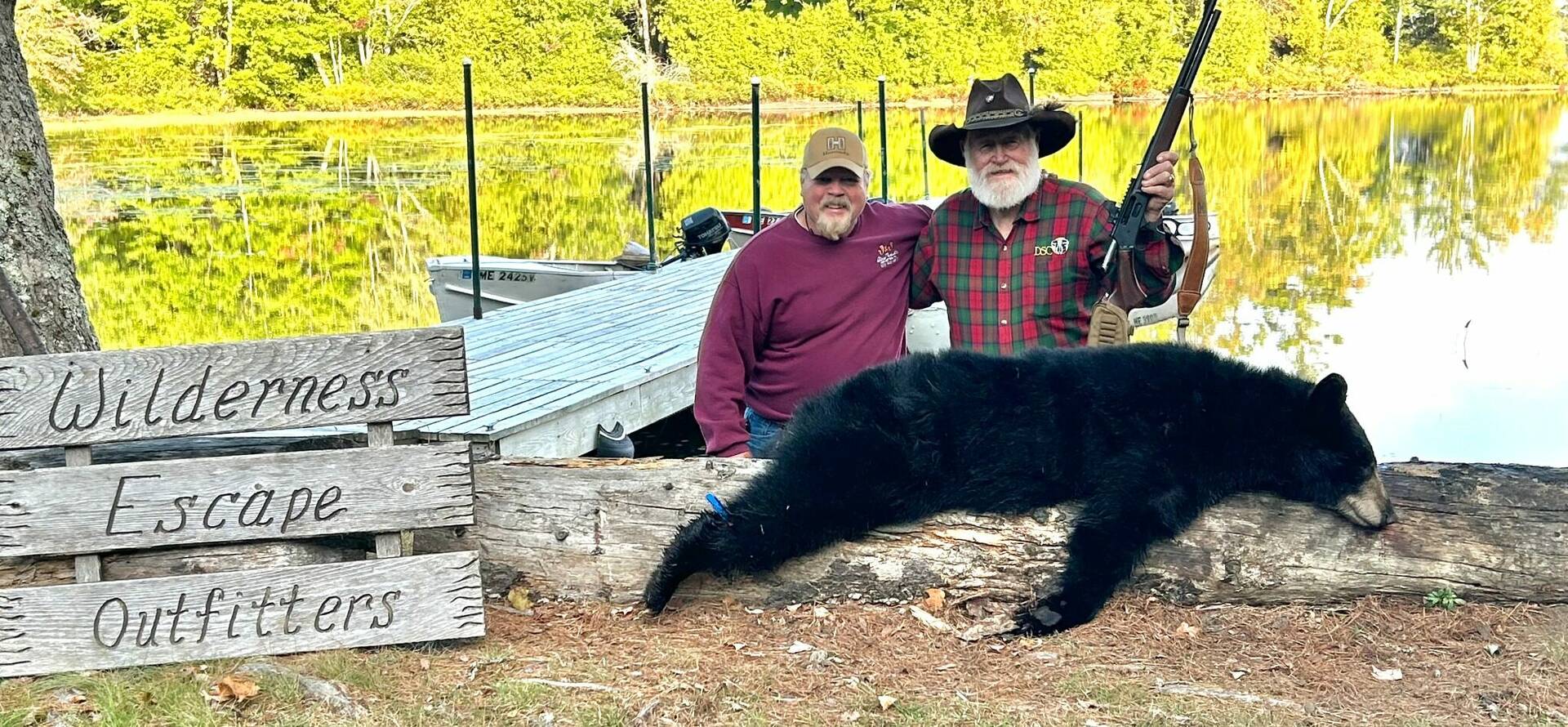
I carry a Burnham Brothers C-3 Long Range Predator call everywhere and every time I go hunting. I have used it to entice a really nice black bear in British Columbia to within less than 50 yards. I shot it with a .375 H&H Mag using Hornady ammo. I have also called in bears in northern New Mexico, as well as in that state’s Gila Wilderness Area. In the Gila, I called in a huge bear that a friend of mine unfortunately missed. We spotted the bear on a slope a half mile away. He was a big black boar with a foot-wide lighter brown strip of hair from between his ears to the base of his tail. He was absolutely gorgeous.
Taking advantage of a crosswind, we cut the distance to around 300 yards. There we set up so we could likely see his approach, thinking he would circle downwind before his hopefully “final” approach.
After my friend sat down, resting his rifle on his knee, I started calling while standing, blowing my call as loud as I could and scarcely stopping to catch my breath. Thirty seconds after I started, the bear erupted out of the underbrush 70 yards away, running directly toward us. I saw my friend jerk the rifle to his shoulder, pointing it kind of in the direction of the bear. He pulled the trigger while the bear was still charging toward us. I saw his bullet hit a tree ten yards to the bear’s left. The bear kept coming toward us. In an effort to reload, my friend short-stroked the bolt, jamming his rifle. The bear was now 20 steps away, running toward us. Foolishly, I had laid my rifle on the ground at my feet before starting to call. I grabbed for my rifle, the bear nearly upon us. No more than eight to 10 feet away, the bear veered to our right and ran past us nearly within touching distance! I watched him disappear into the brush behind us as I nearly had my rifle shouldered. Rifle now in hand, I was ready should he decide to return.
Moments later, satisfied the bear likely kept on running, I looked down at my friend. He was shaking, hands trembling, trying to unjam his rifle. He looked up at me, standing behind him…“I, I, I, I, I NEVER am going to hunt bear THIS way again! Ever, ever!”
Fall black bear hunting can be relaxing or truly adrenaline-charged and exciting! I love it!