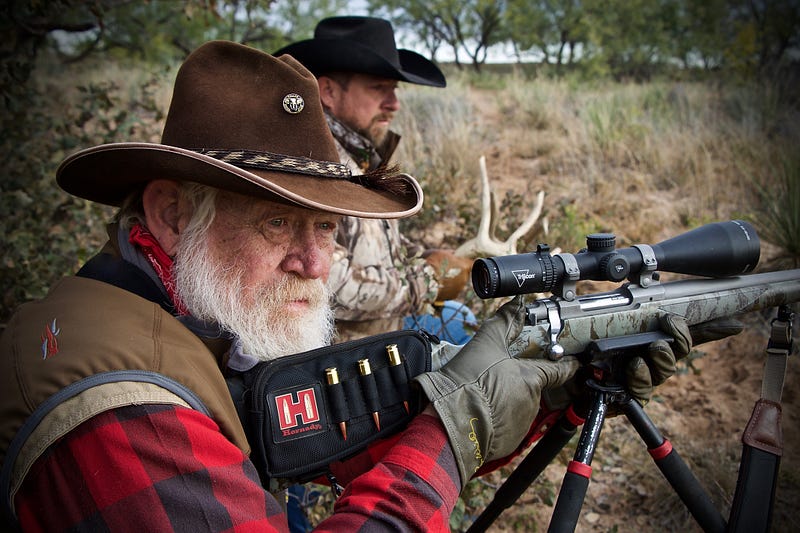
Wildlife biologist and outdoor writer Larry Weishuhn talks about the times he’s suffered from buck fever and discusses what helps him to overcome this.
The massive beamed 10-point buck charged in to the clashing of my rattling horns. He was practically in my lap, as soon as I slammed my two shed mule deer antlers together 10 feet away. My heart was pounding faster than the wings of a hummingbird. I was shaking like the tail of a rattlesnake, completely rattled.
I had rattled in and had taken considerably bigger antlered bucks in the past, but for some reason this particular buck did a number on me.
Raising my single-shot handgun, I pointed it in the general direction of the buck, cocked the hammer, then jerked the trigger so violently there was no way I came close to hitting the buck.
At the shot the buck turned and calmly walked away, while I sat there shaking, wagging my head, trying to determine what happened and why.
All I had learned in a lifetime of hunting whitetails had momentarily been forgotten. Behind me, I heard David Blanton, co-host and cameraman for Realtree Outdoors television series, question “What happened?”
I turned to face him and said, “I missed and missed badly! He totally shook me. It happens!”

A couple of hours later as we drove back to the Encinitas Ranch camp. Realtree’s Bill Jordan who had heard my shot questioned, “Where is he? I heard you shoot!”
“Still out there somewhere in the brush, totally unscathed, likely laughing at me.” I responded, then followed with, “I missed him. He came in so quickly. I got excited and shook, what can I say but I missed.”
“That’s too bad. Even if it’s great footage, we can’t use it in the show.” Said he.
“Bill, if y’all don’t use my miss in the show, I will make certain you never again hunt Texas. I got excited and I missed, it happens! I suspect I’m not the only one that’s ever-caught buck fever, then badly missed a shot at a big buck. Misses do happen. I think it’s important you air them on the show. I’m not proud of missing, but I think showing my miss will possibly make others feel a bit better about their misses. Yes sir, y’all have got to show my miss!” I continued, then added, “Mind what I said, if my miss is not in the show, you’re not coming back to hunt Texas!”
Bill smiled as did David, as both knew I meant what I had said. My miss did make the show, one of the first times anyone had ever shown a miss on an outdoor television show. Guess what, that episode was a huge hit, followed by many, many letters and phone calls (this before emails and texts) saying “Thank you for showing Larry’s missed shot”. If nothing else, it made me real and human to all those who watched that particular episode.
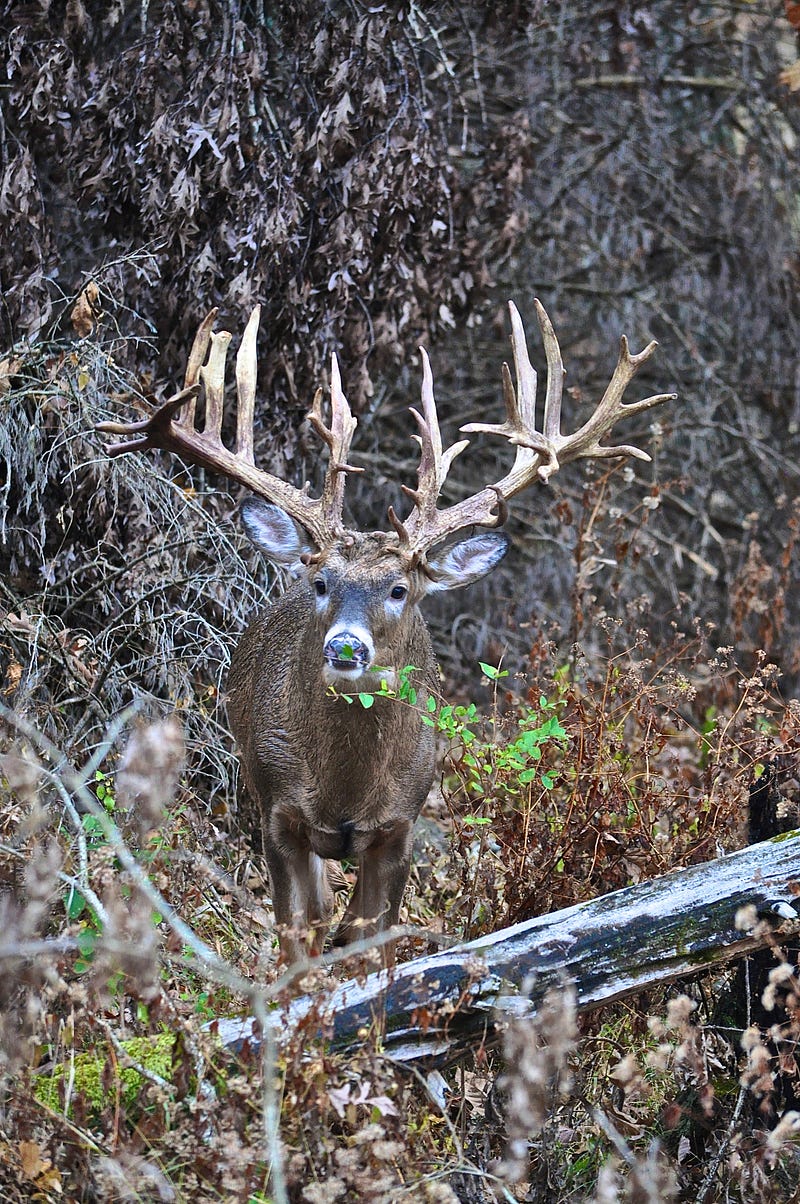
Excitement, “buck ague”, “buck fever” or whatever else you might to call it happens!
What causes it? Technically a substantial immediate release of adrenaline, from the adrenal glands that are located close to one’s kidneys. The trigger is often the sight of a big antlered, horned or large teethed and/or clawed animal, but it could also be a small critter, such as a squirrel or rabbit.
No one, no matter how experienced or new to the game is immune. In the instance just described, I had previously taken considerably bigger antlered bucks, under very similar circumstances. There simply and apparently was something about that particular buck that tripped my adrenaline trigger.
Several years later I was hunting a friend’s property, again in the famed Texas Brush Country. I was after an ancient six-point buck, one with main beams, brow tines and back tines on each beam. Several people had unsuccessfully hunted this buck. He had been encountered only once so far that season, resulting in a shot and a miss.
After five days of hunting, passing up some big-antlered bucks, I finally got my chance. Again, I was hunting with a single-shot handgun chambered in 30–06, which was tremendously accurate with Hornady ammo, capable of one-hole accuracy at 100-yards.
The afternoon I saw him I was watching an opening between two dense thickets. My handgun was solidly rested on shooting sticks. The buck walked out and fed on green growth. I waited for him to present a proper shot. Initially I was not the least bit excited. As the deer started to turn broadside, I was immediately set upon by buck fever; literally shaking almost uncontrollably, my heart rate greatly increased and I was breathing rapidly. I tried holding the crosshairs on the buck. They were all over the deer and the background, likely within 10 feet all around him. I did my best to settle down but could not do so. I finally jerked the trigger and watched my bullet hit the ground half way between the buck and me. I missed that buck by about 50 yards!
Until such things happened to me, I had always associated buck fever as a malady suffered only by those new to hunting. I was wrong and have continued to have occasional bouts of it, now having hunted deer and other big game, including dangerous game across six continents.
My long-standing prayer is, “May I see the animal I’m after and shoot it before buck fever hits me, or may the animal appear and stay around long enough for me to get buck fever and talk myself out of it before taking my well-aimed shot!”
These days I work at not getting buck fever. Throughout the year, when I am at home in my office, I remove the bolt from my bolt-action rifle, then crank my Trijicon scope down to the its lowest magnification setting. I lock my office door, turn on my TV and watch CD’s that show big antlered and horned critters. I also point my bolt-less rifle at mounts on my wall. I concentrate on where to properly place my bullet on those critters on the TV screen and my mounts as well.
When actually hunting, after identifying any animals that appear and that I have no intention of taking, I open my bolt, or cylinder on my Taurus revolver and then put my scope’s crosshairs or red dot sight on the deer or other critters which show up where I am hunting. This seems to help calm me down.
Then, when hunting and the moment of truth is at hand, when I see the animal I want to take, I start taking deep breaths. I place crosshairs or the red dot exactly where I want to put my bullet and do not again look at the animal’s antlers or horns, but concentrate totally on bullet placement. As mentioned, at the same time I take deep breaths. When the crosshairs of red dot settle with very little or no movement, I release all breath and concentrate on putting pressure on the trigger, as in talking to my finger to do its job.
It has taken me a while but I have finally learned not to pull the trigger until it is time to do so, and only when my sights are locked on target. That has been something I have had to learn again and again.
Excitement while hunting is something I hope I never lose and frankly, at this point of my hunting career and life, I doubt I will. I also hope I can continue to control that excitement before it becomes full-fledged buck fever!
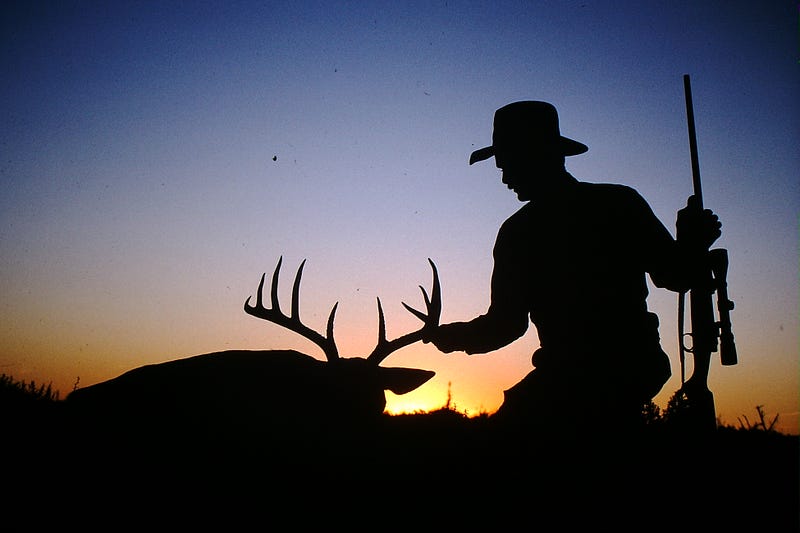
Photo credit: Larry Weishuhn Outdoors